











Along with the further development of the Belt and Road Initiative (BRI), China has some new movements on connecting its dispute resolution mechanism to the world.
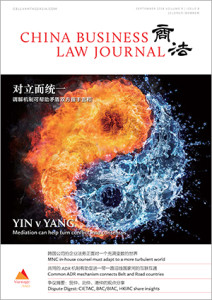 This year marks the fifth anniversary of the BRI. Shared justice reviews China’s recent developments on arbitration and litigation, particularly the enforcement of awards and judgments, which has always been a major concern of foreign parties. Apart from the commercial disputes between equal entities, dispute may also arise between investors and host countries, considering the scale and complexity of BRI projects. Sometimes the prior position that countries enjoy may put the companies at a relevant disadvantage, but there are ways to tackle this problem: carefully study the Bilateral Investment Treaties (BITs), for example. Legal experts also list some points that require their Chinese clients’ extra attention. Also, at the end of the article, we quickly get you through the ABCs of two China International Commercial Courts (CICC) established in June.
Though having strong enforcement, arbitration and litigation may expose companies to direct conflict. “Cherishing harmony” in Confucianism is a longtime belief in Chinese culture. Influenced by such culture, Chinese parties have a long tradition of using mediation to resolve disputes to preserve the commercial relationship with counterparties. But the popularity of mediation extends far beyond China now. This June, the final draft for Singapore Mediation Convention was approved by United Nations Commission on International Trade Law (UNCITRAL), intended to facilitate enforcement of mediated settlement agreements across foreign jurisdictions. A signing ceremony will be hosted by Singapore in August 2019.
Yin v Yang lists the specific features of mediation compared with arbitration and litigation, and discusses the following issues: When should mediation be adopted? What is notable in resolving disputes by mediation? What impact will Singapore Convention bring to parties in mediation? We may witness a rise in dispute resolution via mediation in future, but experts say that mediation is not a one-size-fits-all solution.
Finally, challenges are also opportunities. VUCA, a new word standing for volatility, uncertainty, complexity and ambiguity, may be the best to depict the current world’s overall economic and political situation, and the tendency of populism and deglobalization reflected in policies and regulations.
In his article Navigating the VUCA World, Victor Shen, the chief legal counsel at Henkel Greater China & Korea, writes that despite the deglobalization attempts of various politicians, multinational companies (MNCs) are continually rolling out globalization schemes backed by technologies such as artificial intelligence and big data. In this new era of “Globalization 2.0”, he puts forward six guidelines for local law departments of MNCs in China to comply with, and manifest his confidence of getting fully prepared in this ever-changing legal environment.