




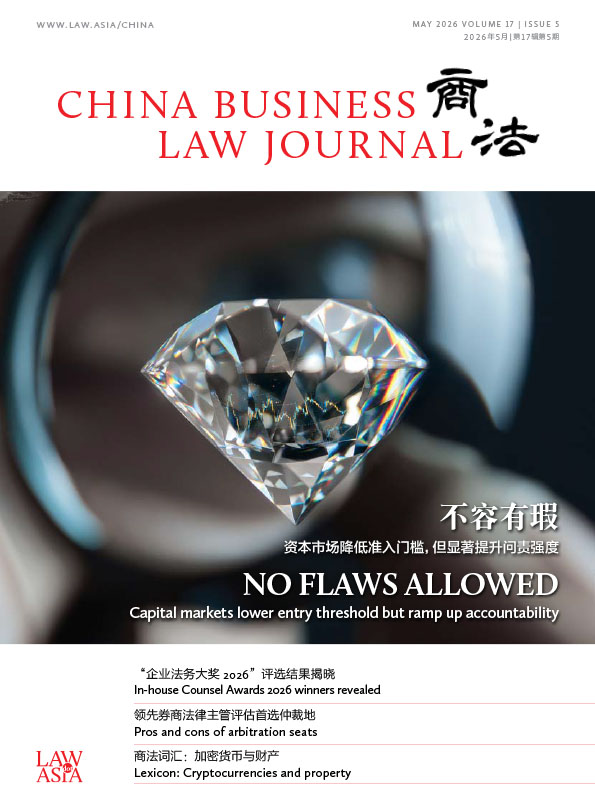








As China’s capital markets across the mainland and Hong Kong open up to capture nascent opportunities, regulators are more determined than ever to ensure accountability at the highest corporate level, writes Kevin Cheng
The capital markets are inviting. For the many hard tech, biotech, AI and other emerging sector startups sprouting across the nation, a listing in Hong Kong or the Chinese mainland may have never seemed more accessible, with stock exchanges keenly adjusting entry standards to accommodate their special circumstances, favourably comparing their immense growth potential to any risks.
On the flip side, the markets are also intimidating. More closely than ever, regulators are scrutinising all listed companies, applicants, sponsors and other intermediaries for cracks that might compromise the integrity and well-being of the whole, with top executives and decision makers increasingly held accountable personally for any misgivings.
In 2026, both sentiments, opposite as they may seem, ring true.
The A+H phenomenon
Despite regional conflicts and the Strait of Hormuz crisis shaking up major bourses worldwide – the S&P 500 dropped 9% at one point and South Korea’s KOSPI plunged 12% in a single day – Hong Kong’s capital markets this year have remained largely unfazed, especially in terms of the ability to attract new listings.
During the first four months, the Hong Kong Stock Exchange (SEHK) saw 49 new IPOs, up from 19 in the same period of 2025. These new listings raised a total of HKD151.4 billion (USD19.3 billion), up from HKD21.5 billion last year, allowing the city to retain its number one status among IPO venues worldwide when valued by funds raised.
The momentum carried over from 2025, when Hong Kong clinched the top spot after hosting 119 listings, raising more than HKD280 billion, including four of the world’s top 10 IPOs of the year, with CATL alone raising HKD41 billion. Encouragingly, the bustle is expected to last for some time. As of May 2026, almost 500 applicants are lining up for a green light from the SEHK’s listing committee.
The impetus is driven to no small degree by secondary listings of A-share companies – those already listed in Shanghai or Shenzhen. According to Dealogic data, 20 out of the top 30 listings in Hong Kong in terms of total proceeds, dated between April 2025 and March 2026, were secondary. Furthermore, nine out of the 10 largest deals were secondary listings, the only exception being Zijin Gold International, a local spinoff of Zijin Mining Group, itself an A+H company.
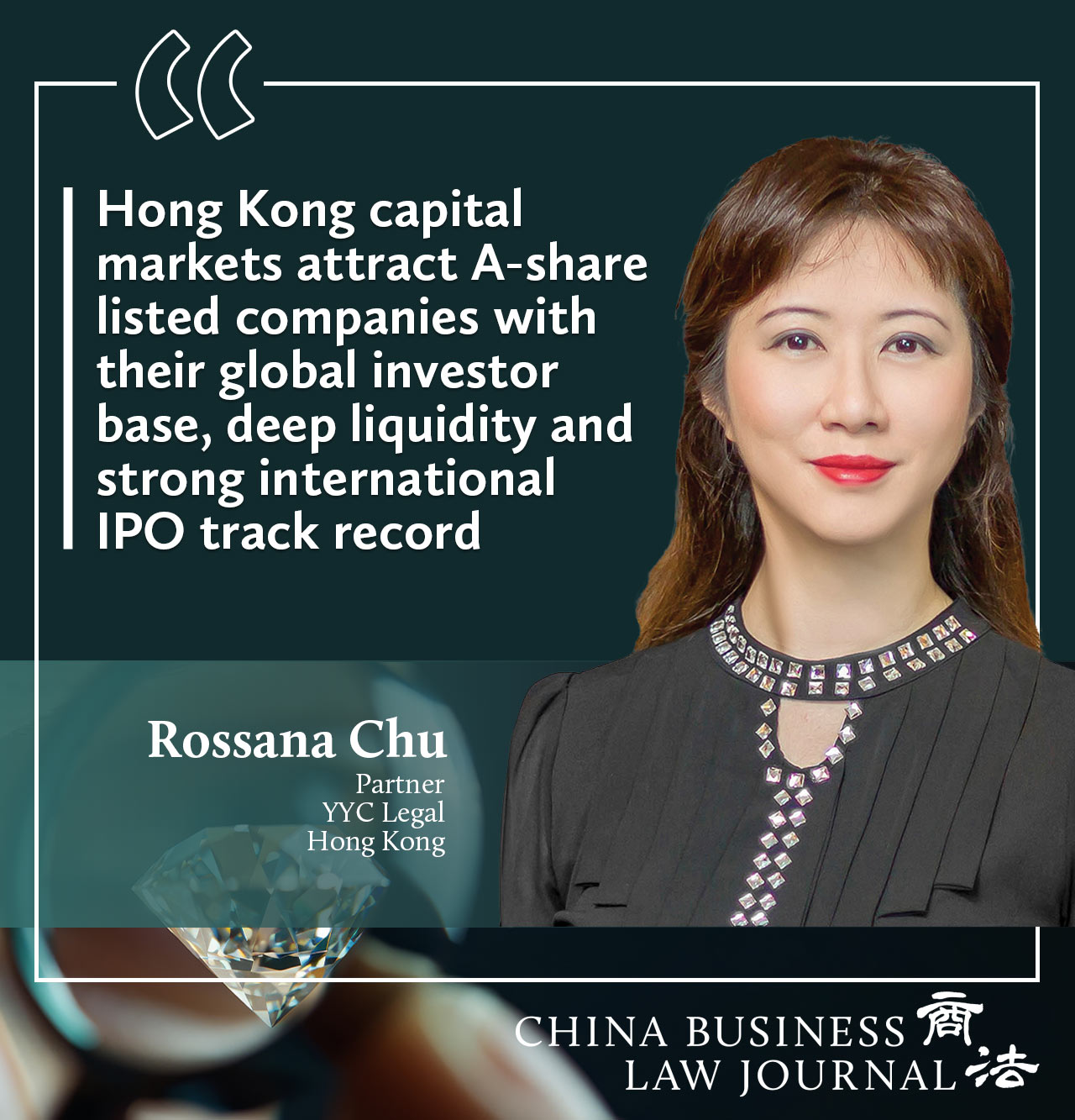
“Hong Kong capital markets attract A-share listed companies with their global investor base, deep liquidity and strong international IPO track record,” says Rossana Chu, a Hong Kong-based partner at YYC Legal. She cites the enhanced corporate profile and market recognition that come with a Hong Kong listing as an important factor, especially if the company “intends to expand into overseas markets or attract investment beyond China”.
Such luring benefits carry significant risks. Dual listing also means dealing with two sets of compliance obligations, requiring skilful reconciliation of the timing, accounting and disclosure differences.
“From a legal perspective confidentiality is of the utmost importance as the H-share listing may be price-sensitive for the A-share markets,” says Benita Yu, senior partner at the Hong Kong office of Slaughter and May.
“Equal dissemination of information between the PRC and Hong Kong in the whole process, including investor education, prospectus disclosures and research report disseminations, should be handled carefully,” she says.
Considering that A+H listings took up 61% of the total funds raised in Q1 2026 on the SEHK, according to KMPG’s quarterly IPO market report, it is fair to surmise that the temptations are thus far outweighing the concerns.
Hong Kong gloss-up
Hong Kong has been an attractive venue for prospective listed companies in the Chinese mainland, and efforts are being made to make it even more so, especially towards applicants in the much-coveted tech and biomedicine sectors.
In March 2026, Hong Kong Exchanges and Clearing Limited (HKEX), owner of the SEHK, unveiled a series of reforms to enhance listing competitiveness. In its March consultation paper, the HKEX proposed to, among other things, reduce the market capitalisation thresholds for listing with a weighted voting rights (WVR) structure, from HKD40 billion to HKD20 billion. The WVR ratio cap is set to be bumped up from 10:1 to 20:1.
Ma Yunyan, a senior partner at the Shenzhen head office of Sundial Law Firm, says that WVR structures are most desired by the major shareholders and core management of startups, especially high-tech founders. Under the “equal shares, equal rights” structure, founders’ equity becomes diluted with new financings, leading to a loss of decision-making capability or, in many cases, lawsuits.
“The market in general cautiously welcomes the reform, recognising that it helps founders retain control and avoid decision-making deadlock,” says Ma. Nevertheless, she notes that the WVR and increased cap apply to only a small number of companies.
The underlying objective of the proposed change, says Chu, is to “attract high-potential companies in new economy sectors to list in Hong Kong, rather than in the US,” noting that they ensure the Hong Kong standards would not be seen as “restrictive” in comparison.
Furthermore, the HKEX proposed that confidential filing previously reserved for secondary listings, biotech companies and specialist technology companies be made accessible to all candidates going forward.
“If implemented, I believe Hong Kong will be a more attractive listing venue, drawing a wider range of companies to list here, which could lead to a potentially expanded pipeline of IPO mandates across more varied sectors and issuer profiles,” says Geng Ke, a Beijing-based partner at O’Melveny.
No compromise on quality
However, if applicants assumed, based on the relaxation measures, that they would be welcomed with open arms onto the main board, with the carpet rolled out and the HKEX gong at the ready, they might be in for a rude awakening.
In a circular dated January 2026, the Securities and Futures Commission (SFC) of Hong Kong voiced concerns over the “declining quality of draft listing documents as well as certain substandard conduct of licensed corporations carrying out sponsor work”.
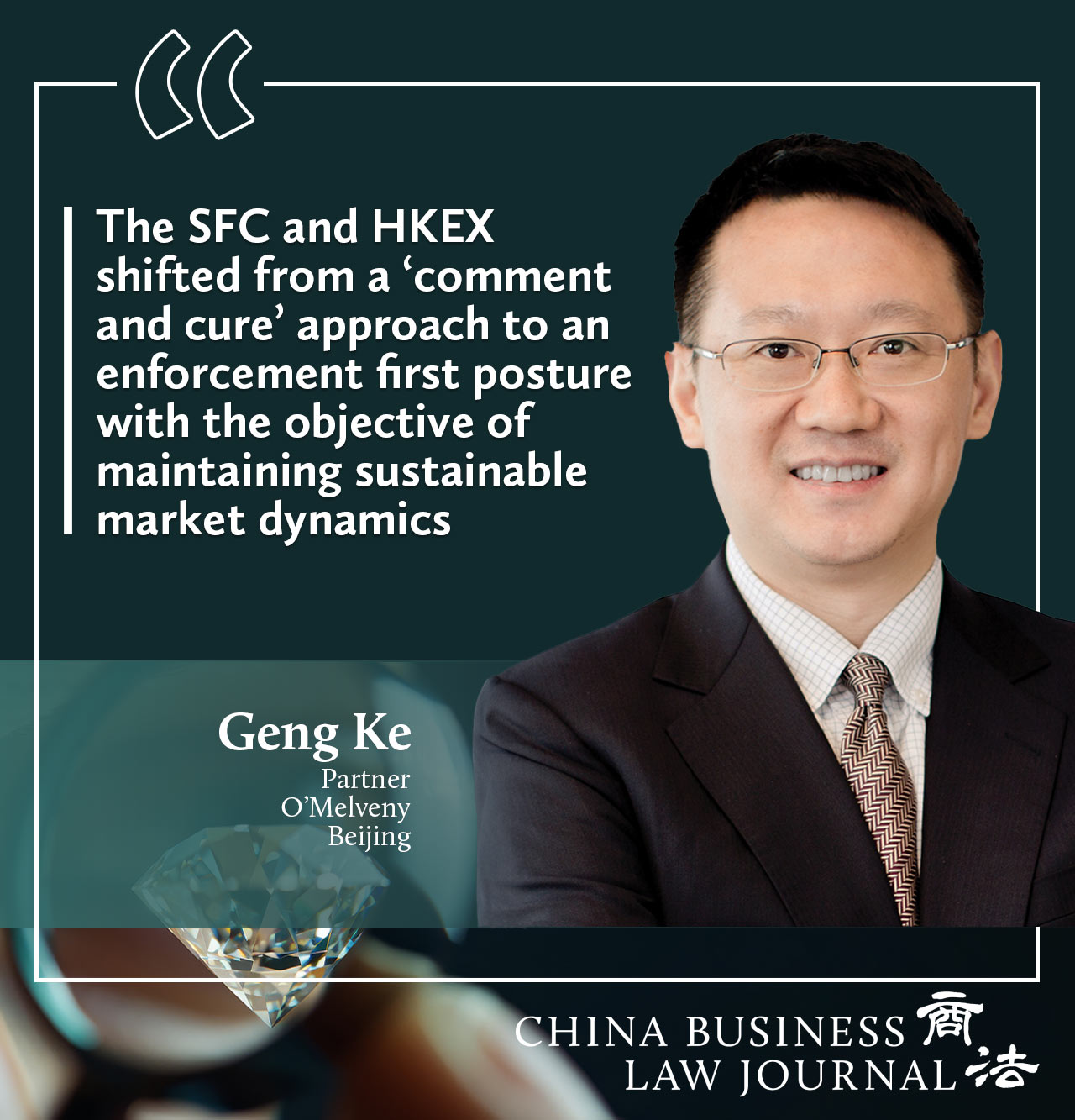
“The tightening of sponsor oversight and prospectus quality … appears to be a regulatory response triggered by the heated Hong Kong IPO market,” says Geng. “The SFC and HKEX shifted from a ‘comment and cure’ approach to an enforcement first posture with the objective of maintaining sustainable market dynamics.”
The SFC found many sponsors over-reliant on third-party experts and critically understaffed for the vast quantities of current and expected listing tasks. Particularly under scrutiny was the capacity of principals – licensed individuals appointed by sponsors to lead and supervise the IPO processes.
Notably, the SFC requires that sponsors, going forward, demonstrate via a signed document that no principal is simultaneously working on six or more active listings. Furthermore, the main body of prospectuses, excluding the appendices, shall not exceed 300 pages.
Ma says these two measures “move forward the responsibilities of prospectus quality control to sponsors and legal counsel, drastically increasing law firms’ professional and reputational risks”.
She nevertheless welcomes the shake-up, describing the measures as timely and necessary. “Sponsors and other intermediaries should not lessen their commitment to a project simply because they lack qualified personnel or are dealing with too much business volume,” she says.
“Nor should they tolerate superficial and generic risk disclosure in prospectuses that demonstrate none of the unique traits of the issuer, just to pass the listing hearing.”
The measures’ effect on sponsors was both obvious and immediate. “We have seen sponsors relinquishing their sponsorship of ongoing deals and there being a slowdown in their taking of new deals,” observes Yu. “Thus, the pipeline of listing applications may slow down this year.”
Wu Lianhua, a Beijing-based partner at DeHeng Law Offices and head of the firm’s securities committee, says that the SFC measures could most directly affect the pending A+H listings. She cites overseas businesses, data compliance, international sanctions, client and supply chain concentration, related party transactions, ESG and continued compliance as areas that lately receive the most detailed HKEX enquiries.
“It is likely that some A+H listings will take longer as a result,” she says.
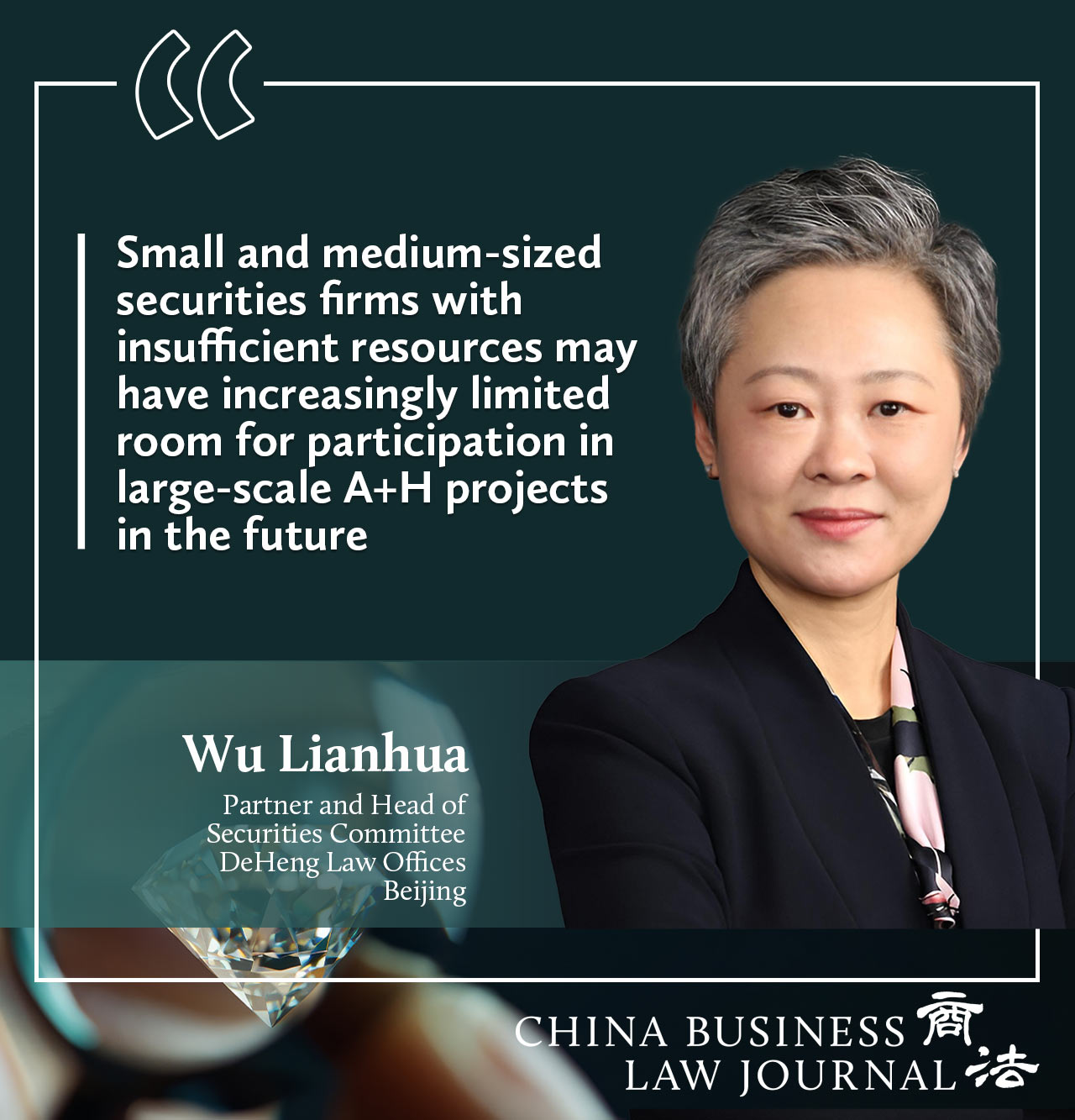
In addition, owing to the extra complexity of A+H listings, Wu predicts further market concentration towards the leading investment banks. “Small and medium-sized securities firms with insufficient resources may have increasingly limited room for participation in large-scale A+H projects in the future,” she says.
The impact of these measures upon legal advisers is less talked about, but Geng nevertheless believes it to be profound. “Lawyers cannot function merely as passive drafters executing issuers’ or sponsors’ instructions,” he says. “We see ourselves as co-gatekeepers bearing direct and personal regulatory exposure for prospectus quality.
“This recalibration is already reshaping the competitive landscape, and I expect it to reward diligent, compliance-focused, and quality-oriented legal advisers over time.”
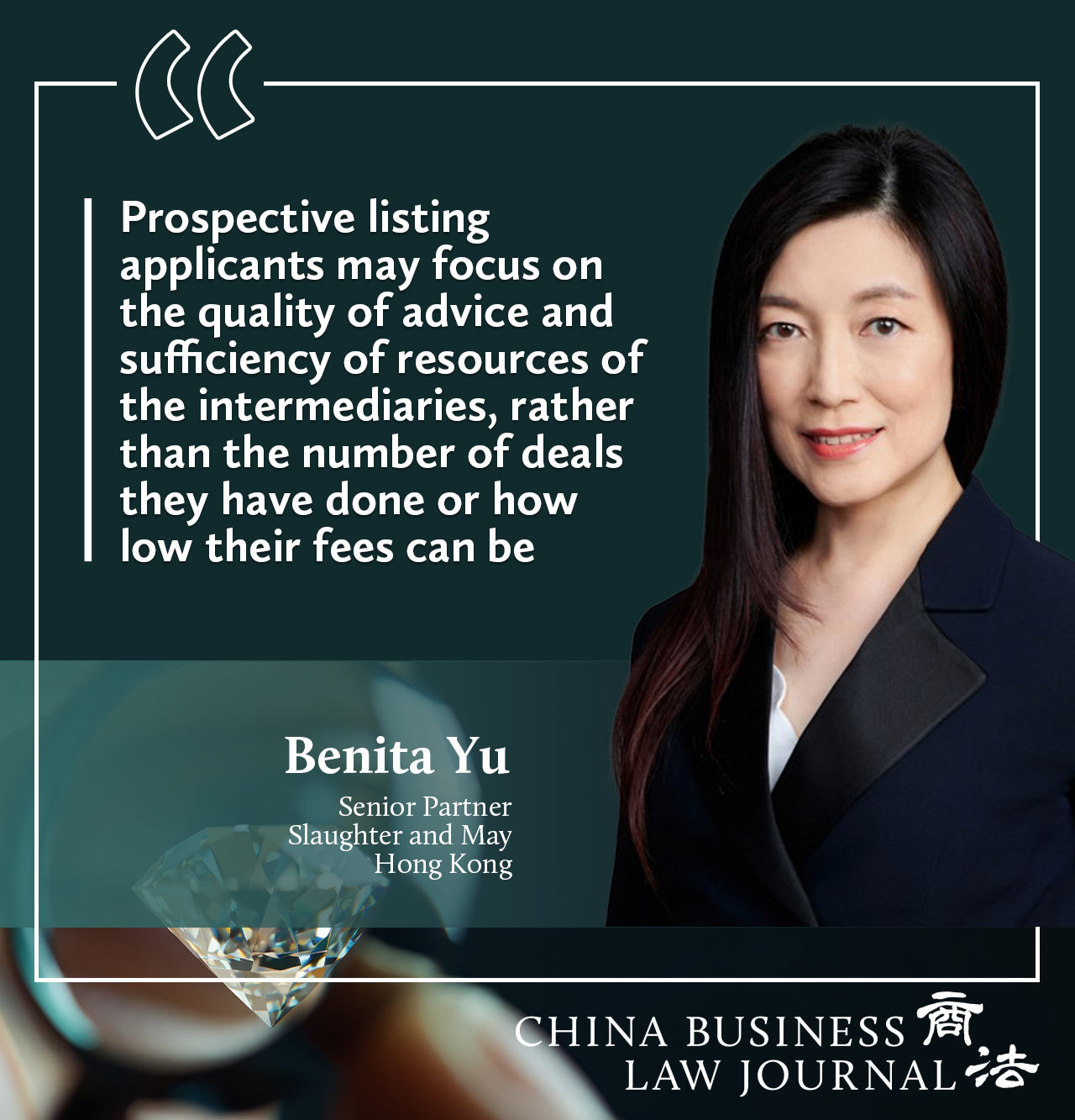
Echoing this sentiment, Yu says: “Prospective listing applicants may focus on the quality of advice and sufficiency of resources of the intermediaries, rather than the number of deals they have done or how low their fees can be.”
Domestic tech rush
Two months after the HKEX launched a dedicated technology enterprises channel (TECH) last year, opening up confidential filing to applicable candidates, the Shanghai Stock Exchange (SSE) debuted its IPO pre-review mechanism for the Star Market, catering to high-quality technology firms. The move has already yielded results.
Recently, ChangXin Memory Technologies (CXMT) and Unitree Robotics both passed their hearings on the Star Market, becoming the first two successful IPO pre-review projects and garnering significant market attention.
The efficiency of the pre-review mechanism became apparent. CXMT’s review took less than five months, while Unitree required a mere 73 days from acceptance of application to passing its hearing.
In April, the Shenzhen Stock Exchange (SZSE) followed suit, allowing candidates to its ChiNext board to submit application documents for vetting before formally filing for an IPO, during which time the documents and review results would be kept confidential.
Wu believes this mechanism is particularly crucial for tech companies with confidentiality concerns regarding trade and technical secrets, noting that it “helps high-quality enterprises defuse potential risks in advance, shorten review cycles, and improve success rates”.
Pre-review was just one of the major ChiNext reforms this year. Another notable development was the introduction of the fourth set of listing standards, which, by optimising metrics such as expected market capitalisation, operating revenue, compound annual growth rate (CAGR) of revenue, and R&D investment, aims to better accommodate innovative startups in emerging and future industries. This sets the ChiNext apart from the hard tech-focused Star Market.
“Yet-to-profit enterprises engaged in national strategic sectors such as integrated circuits, biomedicine and commercial aerospace, which possess proprietary core technologies, high R&D investment and significant technical barriers should prioritise the Star Market,” says Li Qiang, managing partner at the Shanghai office of Grandall Law Firm.
“Conversely, enterprises with innovative business models and rapid revenue growth in modern services or new consumer sectors, as well as those that have achieved a certain revenue scale but are not yet profitable, and those that are transforming traditional enterprises by integrating new technologies, may prioritise ChiNext.”
In May this year, Wu Qing, chairman of the China Securities Regulatory Commission (CSRC), chaired a capital markets forum on supporting modern service and novel consumer goods industries, with representatives present from enterprises in smart consumer goods, trendy domestic brands, modern logistics and creative design.
Yi Jiansheng, a Beijing-based senior partner at Jia Yuan Law Offices, says this orientation will influence the future listing choices of companies in these sectors, with some potentially shifting their targets from overseas to the A-share market.
“Companies in sectors such as consumption and logistics, which have been subject to A-share listing restrictions since August 2023, may have better chances on A-share boards like ChiNext moving forward, provided they align with the concepts of new consumption and modern services,” says Yi.
Holding to account
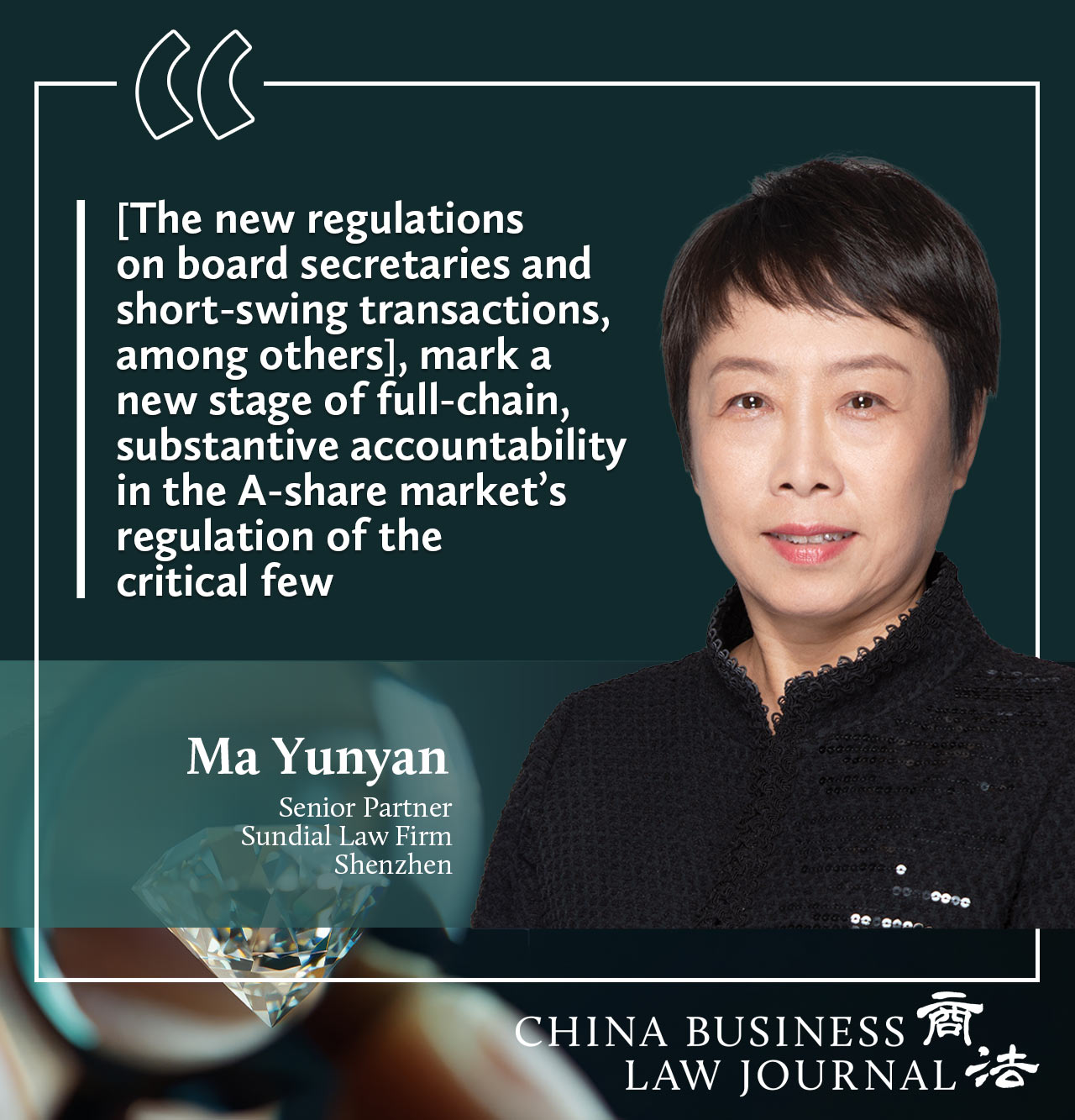
Regulators, on the other hand, do not share the bourses’ inclusive mood. In fact, recent months have seen a surge in the scrutiny over core personnel of listed companies, such as their directors, supervisors and senior executives. “[The new regulations] mark a new stage of full-chain, substantive accountability in the A-share market’s regulation of the critical few,” says Ma.
The shifting role of the board secretary is particularly striking. Following the implementation of the Listed Company Board Secretary Supervision Rules in May, the traditionally supportive role has been upgraded to a corporate governance “gatekeeper”.
Wu says the new regulations are transforming what was a largely administrative position into the true primary individual responsible for compliance and risk control.
Great power comes with great responsibilities and, in the case of board secretaries, great qualifications. “The new regulations explicitly require [board secretaries] to possess over five years of professional experience in finance, accounting, auditing, legal compliance, or the financial sector, or alternatively to hold a Certified Public Accountant (CPA) or a legal professional qualification alongside five years of work experience,” says Ma.
The ramifications cannot be understated. Yi says that, according to market statistics, there are 885 A-share listed companies where the chief financial officer also acts as the board secretary, and 76 where the general manager holds both roles.
This means that, across the entire domestic capital markets, about 1,000 listed companies, roughly one in five, must complete the transition of board secretary before the deadline of 31 December 2027.
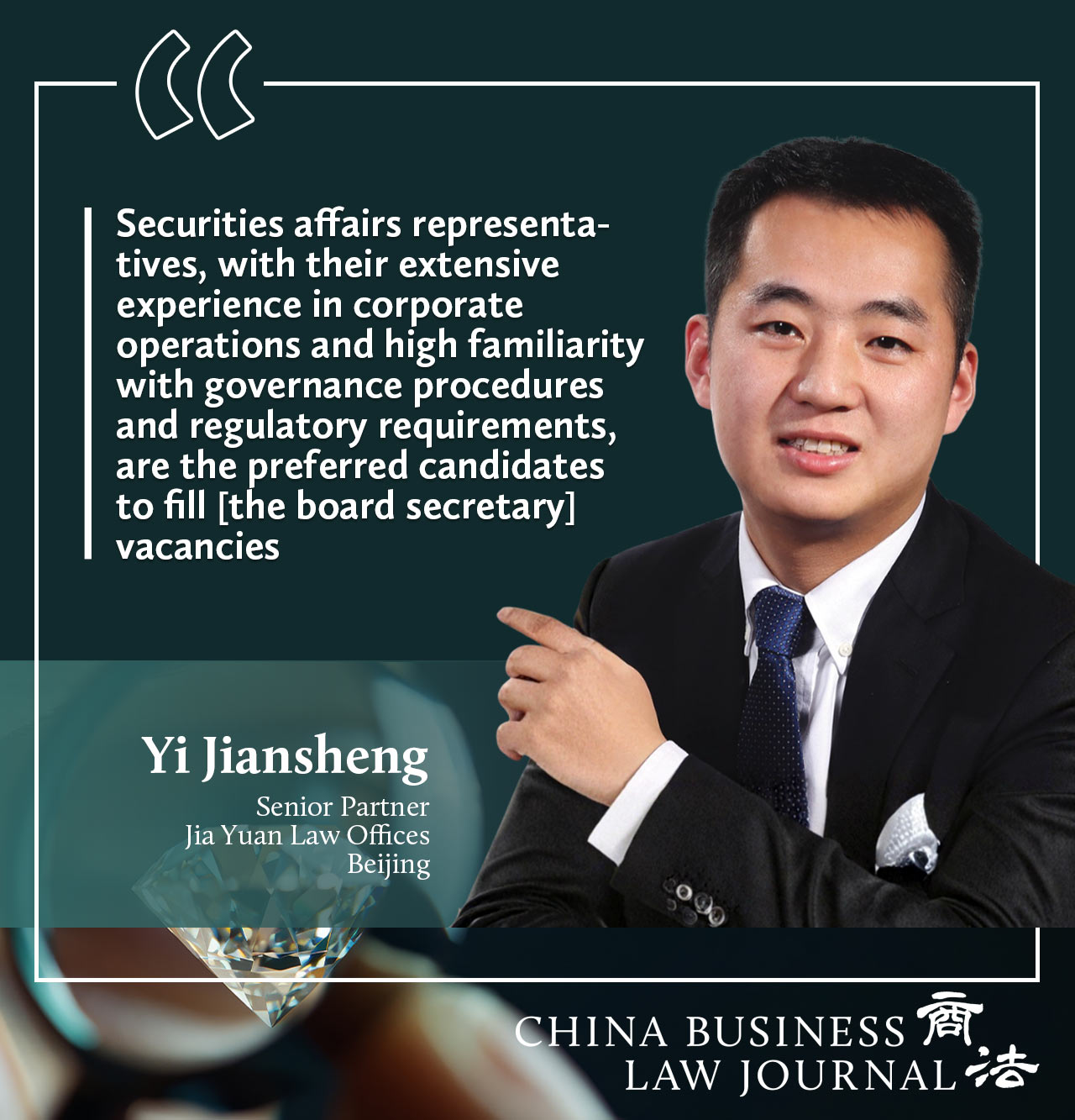
“Internal promotion will be the mainstream option,” says Yi. “Securities affairs representatives, with their extensive experience in corporate operations and high familiarity with governance procedures and regulatory requirements, are the preferred candidates to fill these vacancies.”
Other than board secretaries, the directors, supervisors and senior executives also saw meticulous adjustments to their qualifications, performance standards, remuneration and incentive restrictions following the revisions to the Code of Corporate Governance for Listed Companies, effective from January.
The revised code provides that the performance-based salary of top executives should take up no less than 50% of their total remuneration. In case there is a drop in the listed company’s profitability, such a performance-based salary should be lowered accordingly; otherwise, the company must disclose the reason.
Ma highlights the remuneration recovery mechanism set up by the revised code as noteworthy. “Where the directors or senior executives of a listed company are found to be liable for financial fraud, illegal guarantees or other illegal or irregular activities, their received performance-based compensation would be recovered in full,” she says. “Furthermore, departing from the company does not prohibit recovery.”
The CSRC also issued new regulations on short-swing trading, referring to the directors, officers and major shareholders buying and then selling, or vice versa, their company’s shares within six months. Li cautions that the updated standards to determine short-swing trading should not be overlooked.
“Even when a major shareholder purchases shares when holding less than a 5% stake, selling them within six months after their holding exceeds 5%, it would still constitute short-swing trading,” says Li. “Trading activities of close relatives must also be brought under the monitoring scope.”
The new regulations incorporate securities such as depository receipts, exchangeable corporate bonds, and convertible corporate bonds into the scope of short-swing trading, while simultaneously listing exempted activities such as preferred shares, ETFs, inheritances and donations.
“When relevant parties reduce their holdings through shareholding platforms, they often lack the awareness to discern whether the platform constitutes a party acting in concert,” says Ma. “They rarely take the initiative to assess whether the shares held by the platform need to be aggregated with their personal holdings.
“Therefore, we often remind shareholders to verify, before the reduction, whether the disposal violates any previously made commitments, including the requirement that after acquiring shares with restricted float, the transferee must adhere to the transferor’s original remaining lock-up period.”
THE RED-CHIP DILLEMA
At the end of April, DSC Holdings, an automotive digital solutions provider and online dealership with offices in Beijing and Hangzhou, was greenlit by the China Securities Regulatory Commission (CSRC) for listing on the Nasdaq. It was the regulator’s first US listing nod in 2026 – interest for US listing by Chinese firms has been down and the filing process is slow – but that is not why it is considered significant.
DSC was incorporated in the Cayman Islands but operates in China, making it a typical red-chip company.
Following a Bloomberg report earlier this year claiming, via cited sources, that certain companies applying for a Hong Kong listing were asked to dismantle their red-chip structure, there was widespread speculation that regulators no longer accepted the unorthodox capitalisation mode that, in its heyday, helped giants such as Sina, Baidu and Alibaba to enter the US stock market.
Consequently, DSC’s success was met with a collective sigh of relief, but it does not necessarily mean the red-chip companies are out of the woods.
Geng Ke, a partner at the Beijing office of O’Melveny, believes that the biggest takeaway is not that the door to red-chip listing remains open, or at least left ajar, but “the terms on which passage is now granted”.
He says issuers must satisfy substantive compliance requirements, which include, among others, a credible demonstration that the offshore structure serves a genuine necessity, stringent cybersecurity and foreign exchange compliance, and transparency over onshore assets, operations and tax obligations.
“The regulatory philosophy is probably not full prohibition but to support compliant cross-border capital formation in a disciplined manner and bring red-chip/VIE structures into a transparent, traceable and accountable framework,” he says.
Still, to many red-chip companies, the structure could prove more trouble than it is worth, and dismantling needs to be seriously considered. Li Qiang, managing partner of the Shanghai office of Grandall Law Firm, advises companies to carefully weigh all relevant factors including listing destination, nature of industry and shareholding structure before making a decision.
He advises US or Hong Kong-bound listing candidates to consider retaining the red-chip structure, and those planning a secondary A-share listing, or a direct H-share listing in Hong Kong – as opposed to listing via red-chip – to consider dismantling it.
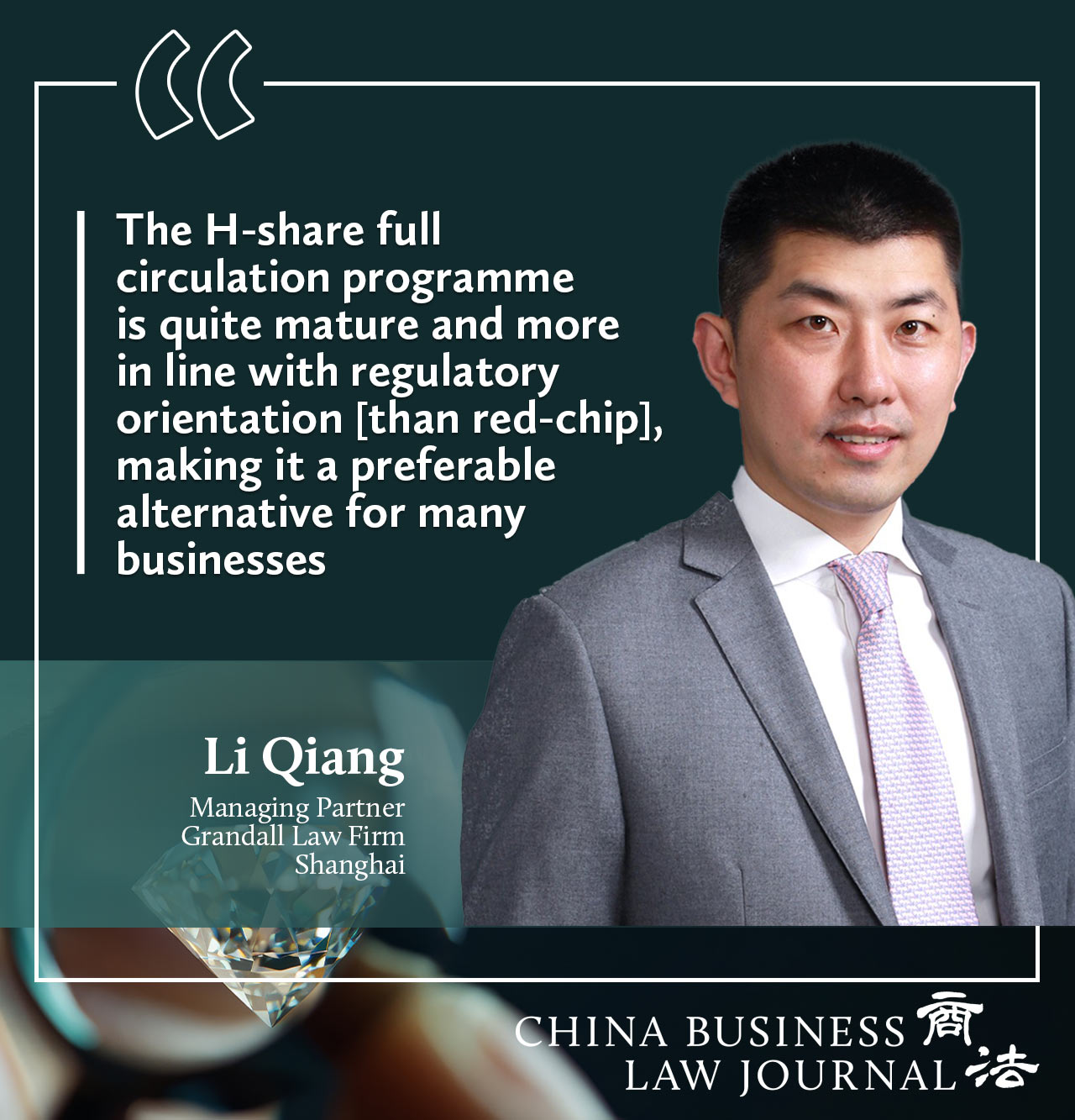
“The H-share full circulation programme is quite mature and more in line with regulatory orientation, making it a preferable alternative for many businesses,” he says, referring to the regime that allows domestic shares to be converted to freely tradable H-shares.
Li says that businesses engaged in restricted or forbidden industries under the Special Administrative Measures (Negative List) for Foreign Investment Access (e.g., internet, value-added telecoms services, education) need to retain the VIE structure. Otherwise, foreign direct shareholding would be more likely to gain regulatory approval.
Dismantling the red-chip structure could also be troublesome. Li cautions that transferring shares of a domestic wholly foreign-owned enterprise (WFOE) by a Hong Kong company is subject to a 10% corporate income tax, and that a share repurchase by a Cayman company may be deemed an indirect transfer of Chinese taxable property, potentially resulting in tax basis losses for investors.
He suggests that the company prioritise the “capital increase + share transfer” model to dilute the Hong Kong company’s shareholding percentage, thus reducing the gains from the transfer.
Regarding the complex process of repatriating offshore funds, Li recommends “prioritising the Cayman entity’s cash on hand, introducing third-party bridging funds to alleviate short-term pressure, and designing a funds path featuring step-by-step payments and revolving transfers”.
He reminds companies to also pay attention to the scaling back of offshore shareholder equity, the assumption of special rights, historical compliance issues and lawsuits, and tax issues when bridging domestic and offshore employee stock ownership plans.
Practitioner’s Perspective Article Series
Preserving listing status against delisting red lineBy Xu Zhiyuan, Tahota Law Firm |
 |
IPO alternative: Public M&A route to capital marketsBy Kang Xiaoyang, Kangda Law Firm |
 |
Unwinding red-chip structuresBy Vincent Shen, Commerce & Finance Law Offices |
 |