













Toyota and Suzuki have announced combined investments exceeding USD11 billion in Indian manufacturing. Honda has designated India as the production base for its Zero series electric vehicle (EV), and Japan’s direct investment in India’s transport sector rose more than sevenfold between 2021 and 2024. A legal risk once confined to the smartphone industry is now migrating into the automotive supply chain: standard essential patent (SEP) licensing.
Every modern connected vehicle implements global wireless standards: 4G/5G for telematics and over-the-air updates; C-V2X for collision avoidance (standardised under 3GPP releases 14 and 16); Wi-Fi 6 and Bluetooth for infotainment; and ISO/IEC 15118 for EV charging communication. Each of these standards is SEP-encumbered. Unlike a conventional patent, which a competitor can design around, an SEP provides for no alternative. To implement the standard is to use the patent.
Japan developed CHAdeMO, a pioneering DC fast-charging standard. The Bureau of Indian Standards has, however, mandated CCS2, and by 2024, CHAdeMO infrastructure had been largely phased out. Now Japanese original equipment manufacturers (OEMs) must implement CCS2 – a distinct SEP landscape. Standard selection is a licensing decision that locks in obligations for the vehicle’s entire commercial life, potentially 15 years or more.
Courts make India SEP framework
Patent attorney
Kochhar & Co
The Patents Act, 1970, contains no definition of an SEP and no fair, reasonable and non-discriminatory (FRAND) formula. Delhi High Court rules have recognised SEPs procedurally, but all substantive law has been court-made.
In Ericsson v Lava (2024), India’s first full-trial FRAND determination, Delhi High Court awarded INR2.44 billion (USD25.6 million) to Ericsson. Three holdings directly affect automotive companies.
First, implementing a standard means implementing all essential patents; damages are assessed across the entire SEP portfolio. For any OEM implementing 5G and C-V2X, a single enforcement action generates portfolio-wide liability.
Second, Lava was held an “unwilling licensee” for failing to engage meaningfully, a finding that increased damages. Third, the court scrutinised pre-litigation negotiation conduct in detail, making every licensing communication a potential exhibit in future proceedings.
Further, Delhi High Court’s ruling, in Ericsson v Competition Commission of India (2023), held that the Patents Act is lex specialis (specific law), which excludes the CCI from investigating SEP licensing conduct. For SEP holders, this lowers the risk of parallel antitrust proceedings. For implementers, it closes the antitrust defence, making proactive licensing engagement the primary risk management tool.
In Intex Technologies v Ericsson (2023), the Division Bench of Delhi High Court overruled the four-step injunction threshold of Nokia v Oppo (2022) as erroneous. SEP holders can obtain interim injunctions on a prima facie showing alone. For just-in-time automotive supply chains, an injunction on a telematics control unit or cellular chipset could halt production, with no short-term alternative.
Audit supply chain SEP exposure
Conduct a supply chain SEP audit. Map every connectivity standard across each vehicle model and confirm, at each supply chain tier, whether licences exist and extend to the OEM level. Indian courts have affirmed that royalties are calculated on finished vehicle price, making the OEM the primary target regardless of where the SEP is physically implemented.
Evaluate Avanci participation. The Avanci 5G Vehicle programme offers a single per-vehicle licence covering cellular SEPs (2G-5G). This consolidates the largest SEP risk category at a predictable cost.
Build a FRAND negotiation record. Respond to every licensing approach promptly, request claim charts, document counterproposals, and maintain a full audit trail. Ericsson v Lava makes this record central to any future court assessment of remedies.
India 5G raises SEP stakes
With India’s 5G network covering 773 of 776 districts as of early 2025, every connected vehicle manufactured or sold in India is already an SEP implementer. The courts have set enforceable FRAND rates, validated portfolio-wide damages, sidelined competition law as a counterweight, and confirmed interim injunctions as an available remedy.
Japanese automotive companies that treat SEP licensing as a core element of their India strategy will be best positioned to protect both their IP and their supply chains.
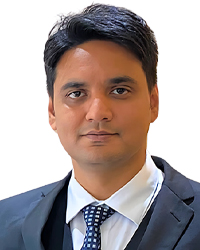
Gaurav Choubey is a patent attorney at Kochhar & Co.
 Kochhar & Co.
15th Floor, IREO Grand View
Tower, Golf Course Extn. Road,
Sector 58, Golf Course Extension
Road, Gurugram – 122 011
India offices: New Delhi,
Bengaluru, Mumbai, Chennai,
Hyderabad and Gurugram
Overseas offices: Dubai,
Chicago and Toronto
Contact details:
T: +91 124 642 5222
E: corporate@kochhar.com