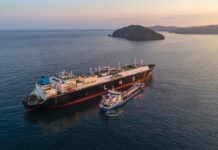







The Prevention of Pollution of the Marine Environment from Ships Administrative Regulations, adopted by the State Council on 2 September 2009, came into effect on 1 March. The principal objectives of these regulations are to prevent marine environmental pollution in the PRC’s territorial waters (including inland waters, territorial seas, the adjacent zone, exclusive economic zone, continental shelf and other territorial waters subject to the PRC’s jurisdiction) from ships and their related operational activities, and to improve emergency response, clean-up and other such mechanisms. It is understood that the Ministry of Transport and the Maritime Safety Administration have formulated, or will soon formulate, further detailed rules and measures for the implementation of the regulations.

Partner
LC & Co
The regulations aim to prevent pollution caused by the discharge and carriage of pollutants by ships, and pollution occurring in connection with such shipping- related operations as hold clearing, hold cleaning, fuel supply and refuelling, loading and unloading, lighterage, shipbuilding, salvage, shipbreaking, containerization of polluting and hazardous cargo, tank filling and pollution clean-up operations. They also cover the use of ships to carry out surface and underwater work; the response to, handling and investigation of ship pollution incidents; damages for ship pollution incidents; and the corresponding legal liability.
The regulations also introduce a system for insurance against civil liability for oil pollution damage from ships. This is the first time that such provisions have been included in State Council-level regulations. The regulations additionally establish a compensation fund system for oil pollution damage from ships.
Scope of application
Owners, operators and managers of PRC-flagged ships are required to establish systems to ensure safe operation and to prevent pollution from ships. Owners, operators and managers of all ships, including non-PRC-flagged ships, as well as relevant operating entities, are required to formulate contingency plans for the prevention of pollution of the marine environment. All ships are required at all times to carry certificates and documents relating the prevention of pollution of the marine environment. The PRC Prevention of Pollution of the Marine Environment From Ships and Related Operational Activities Administrative Regulations (Draft for Comment), formulated by the Ministry of Transport, provide that such documents specifically include an oil pollution prevention certificate, a domestic waste water pollution prevention certificate, an air pollution prevention certificate, an on board oil pollution emergency response plan, an oil record log and other such certificates and documents.

Lawyer
LC & Co
The certificates and documents relating to the prevention of marine environmental pollution carried by foreign flagged ships are required to satisfy the requirements of the relevant international treaties to which the PRC is a signatory or a party, and comply with the requirements laid down by Marpol 73/78 (the International Convention for the Prevention of Pollution from Ships, 1973, as modified by the Protocol of 1978).
Damage limitation and insurance
With the exception of the limits on liability for marine pollution caused by bulk persistent oil substances carried by ships, which are governed by the international treaties to which the PRC is a signatory or a party (i.e. the limits on liability specified in the International Convention on Civil Liability for Oil Pollution Damage, 1992), the limits on marine damages for other ship pollution incidents are to be governed by the PRC Maritime Law.
The Insurance Against Civil Liability for Damage Caused by Oil Pollution from Ships Implementing Measures, adopted by the State Council on 9 July 2010, regulate in detail insurance against civil liability for damage caused by oil pollution from ships, and the amount required.
With respect to ships that carry bulk persistent oil substances, the amount of the insurance against civil liability for damage caused by any oil pollution they cause should not be lower than the amount specified in the International Convention on Civil Liability for Oil Pollution Damage, 1992 as revised in 2000. With respect to ships that carry something other than a persistent oil substance, the amount for such ships of less than 1,000 gross tonnes should not be less than the limit on marine damages specified in the PRC Maritime Law.
The implementing measures also contain detailed provisions on the qualifications of insurers providing insurance for PRC-flagged ships. In fact, in 2007 the Maritime Safety Administration published a list of insurers for the purposes of implementing the International Convention on Civil Liability for Oil Pollution Damage, 1992, and the International Convention on Civil Liability for Bunker Oil Pollution Damage, 2001, and some famous ship mutual assurance associations have already secured permission to provide oil pollution damage liability insurance for PRC-flagged ships.
Foreign-flagged ships are required to have insurance against civil liability for oil pollution damage or another financial security certificate or insurance against civil liability for bunker oil pollution damage or other financial security certificate issued by the competent authority of the relevant member state or an organization authorized by it.
Clean-up operation agreements
The operator of a ship that carries bulk polluting or hazardous cargo, or of any ship of 10,000 gross tonnes or above, is required to enter into a pollution clean-up operation agreement with an entity that has pollution clean-up qualifications before the ship commences operations or enters or exits a port. This agreement is to specify the respective rights and obligations of the parties. The maritime authorities are currently reviewing the pollution clean-up qualifications of relevant entities, and have not yet published a specific list of names. Consequently, this requirement cannot be implemented at the moment.
The expenses incurred when the state arranges for a relevant entity to respond to an emergency and clean up pollution should be paid on a priority basis out of the damages for the oil pollution from the ship. The ship that is required to bear such expenses should pay them in full, or provide equivalent financial security, before setting sail.
Ship pollution incident reports
Once a ship is involved in a pollution incident, it is required promptly to initiate its emergency response contingency plan and report to the nearest maritime safety administration. The detailed contents of such a report are laid out in the regulations.
Henry Lee is a partner and Hu Huafang is a lawyer at LC & Co
LC & Co
Suite 802A, Building B
Jinying Mansion, 1518 Minsheng Road
Shanghai, China
Postal code: 200135
Tel: +86 21 6104 2958
Fax: +86 21 6104 2959
www.lclaw.cn
Henry Lee
E-mail: henry.lee@lclaw.cn
Hu Huafang
E-mail: huafang.hu@lclaw.cn