




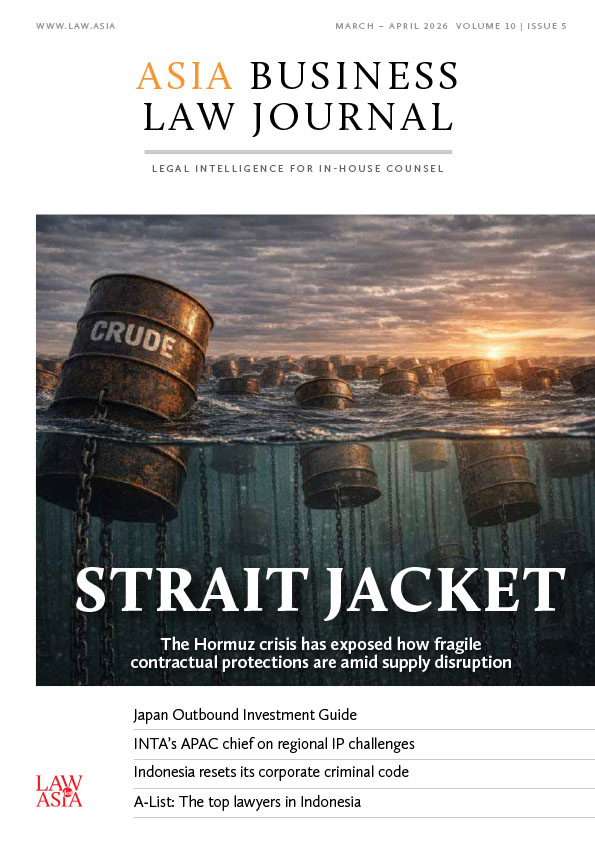







The Strait of Hormuz crisis has exposed how fragile contractual protections are amid supply disruption. Experts tell Sheryl Ubana why it is time to rewrite the force majeure clauses that anchor global trade
Tensions in the Strait of Hormuz through which about 20% of the world’s oil and liquefied natural gas (LNG) passes, have sent shockwaves across global energy and commodity markets.
As hostilities escalated, fuel prices surged, shipments stalled and risk premiums climbed. Following the recent ceasefire, oil prices fell sharply by almost 15%. Yet stability of trade and supply is far from restored.
The impact on Asia from the conflict and closure of the strait is enormous. The US Energy Information Administration reported in 2024 that 84% of the crude oil and condensate, and 83% of the liquefied natural gas that moved through the Strait of Hormuz was destined for Asian markets. China, India, Japan and South Korea were the top destinations for crude oil being moved to Asia.
The Australian Institute of International Affairs states that Japan is even more exposed, with about 95% of its crude oil coming from the Middle East. The crisis poses a threat to more than just energy. A full-spectrum supply chain including fertiliser, critical to food security across South and Southeast Asia, is at risk, with the steady movement of manufactured goods, electronics and consumer products also having to pass through Gulf ports.
Even if the strait fully reopens, supply disruptions and logistical bottlenecks are likely to persist for months. The speed of recovery will depend on how long supplies are disrupted, and how stable any peace agreement proves to be, according to the Atlantic Council Global Energy Centre. A prolonged closure, combined with a fragile truce and improved alternative supply chains, may also leave companies hesitant to quickly return to the route.
Amid ongoing uncertainty, buyers and suppliers face a pressing question: At what point does disruption justify non-performance? The answer, legal experts say, depends less on the scale of the crisis and more on the precise wording of contracts, in particular how force majeure clauses are defined and applied.
Experts say there are practical steps businesses can take to regain control. Rather than waiting for the next escalation, they point to the immediate need to consult legal teams to re-examine the language anchoring existing agreements, strengthen risk allocation and update force majeure provisions.
The anchor
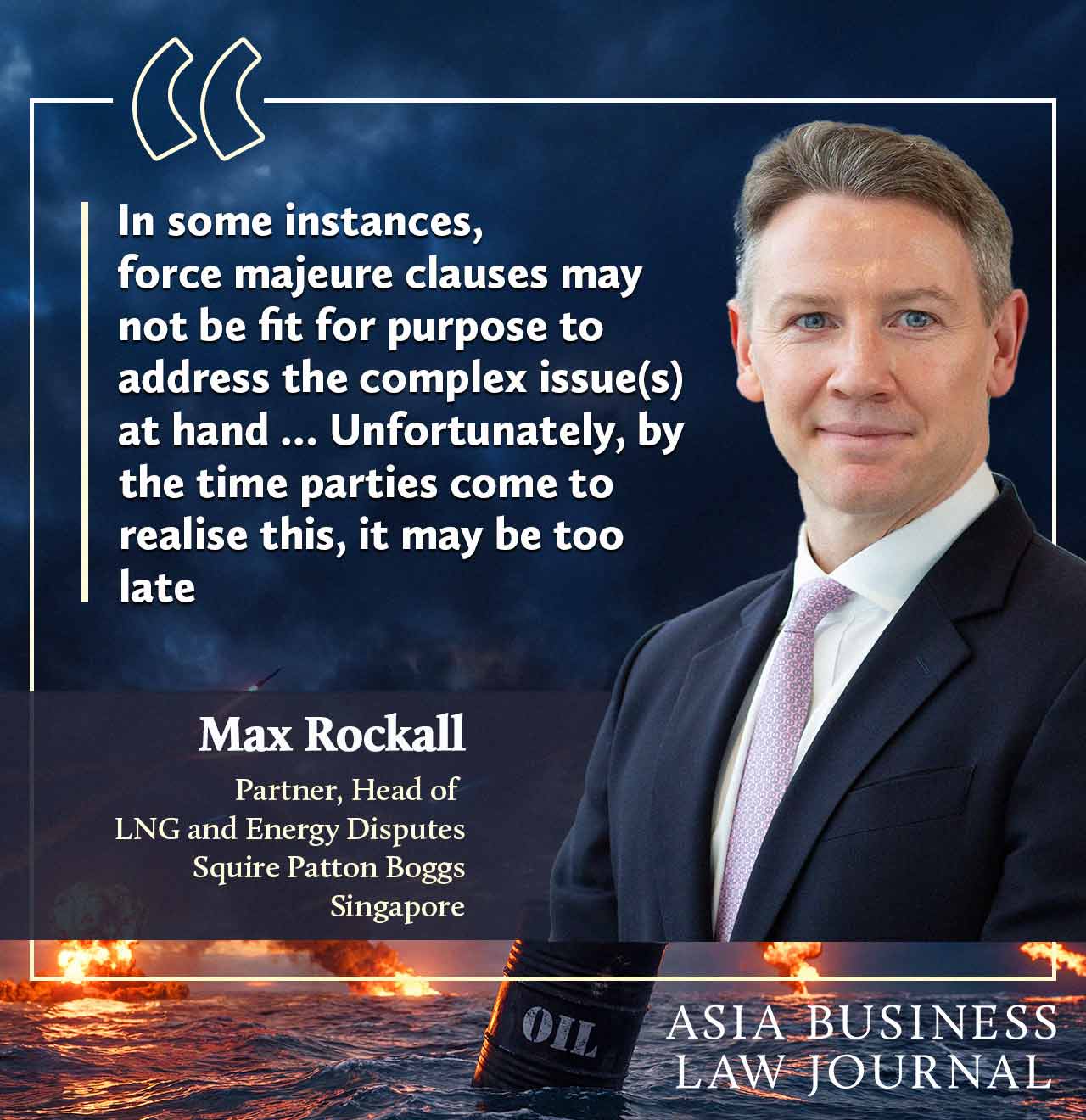
“The first point that bears noting is that force majeure is a ‘creature of contract’ – not a standalone legal principle,” says Max Rockall, partner and head of LNG and energy disputes APAC at Squire Patton Boggs in Singapore.
Kenny Yap, partner and co-head of international trade and maritime practice at Allen & Gledhill in Singapore, says: “How parties would frame and substantiate force majeure claims would depend on a number of factors including the precise wording of the force majeure clause, the applicable law, the factual circumstances giving rise to the alleged force majeure event, and the effect such event has on the contractual obligations of the parties.
“Whether such an assertion would succeed at the end of the day would depend on the facts and circumstances of the case.”
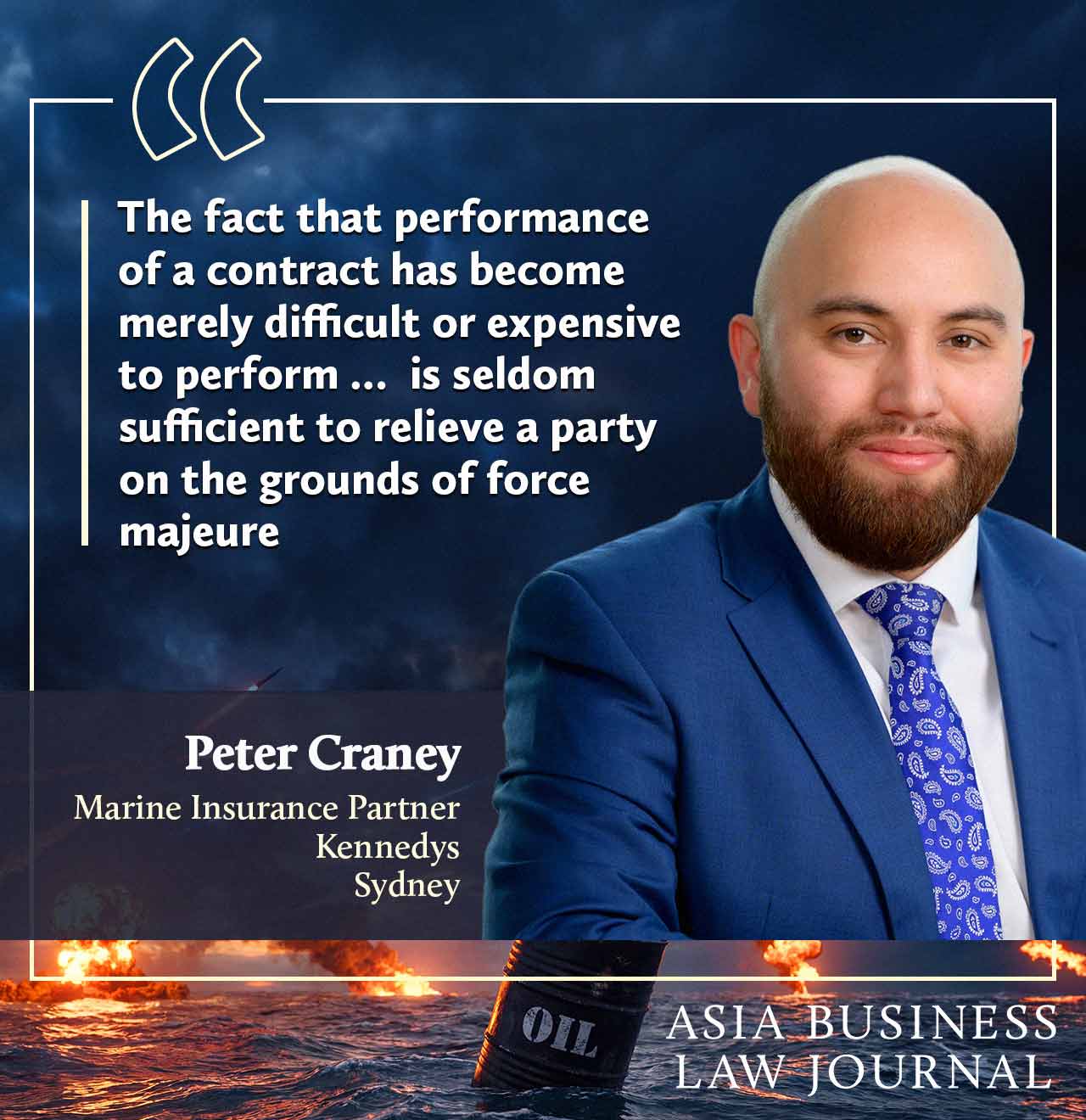
Peter Craney, marine insurance partner at Kennedys Law in Sydney, says that force majeure clauses “will often require the party affected by the force majeure event to notify the other party of the event comprising force majeure as soon as reasonably practicable”.
In recent weeks, Rockall says the market has heard of two different categories of force majeure declarations:
-
- Those originating from QatarEnergy, as seller, arising out of missile attacks that caused damage to the Ras Laffan facility; and
- Those emerging from portfolio LNG sellers with offtake capacity at LNG terminals in the Middle East.
“Whether or not these are valid force majeure claims will depend on whether the party claiming relief has followed the force majeure provisions of the contract accurately,” says Rockall.
You must be a
subscribersubscribersubscribersubscriber
to read this content, please
subscribesubscribesubscribesubscribe
today.
For group subscribers, please click here to access.
Interested in group subscription? Please contact us.
你需要登录去解锁本文内容。欢迎注册账号。如果想阅读月刊所有文章,欢迎成为我们的订阅会员成为我们的订阅会员。