






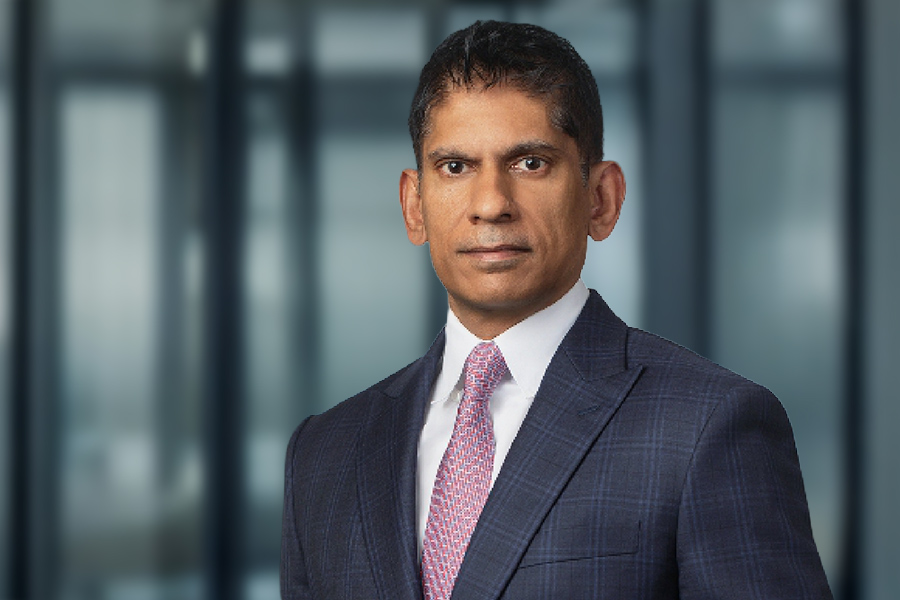





Reed Smith’s newly appointed Singapore managing partner Manoj Purush says his first order of business at the firm’s helm is to sharpen focus across multiple industries.
Purush, who succeeded Timothy Cooke, told Asia Business Law Journal that he also intended to strengthen “the transactional, disputes and regulatory practices”.
“We will continue to sharpen our focus on our core industries – energy and natural resources, entertainment and media, financial services, healthcare and life sciences, and transportation,” he said.
“We will also continue to sharpen our focus on sectors and practices where Reed Smith is already highly regarded globally – such as corporate, finance, M&A, disputes, international arbitration, regulatory and financial services – while tailoring those strengths to the needs of clients operating in and out of Singapore and Asia more broadly.”
Purush also offered insight into his long-term goals, which revolve around “driving cross-border work, thought leadership and innovation across the region”.
Trend-wise, he has already observed rising demand in certain areas amid ongoing economic uncertainty and geopolitical tensions. Stronger growth in arbitration, regulatory and compliance work is also on the cards, in his view.
“We have seen an uptick in regulatory, sanctions, restructurings and dispute resolution workstreams,” he said. “International arbitration and cross-border disputes remain strong, particularly as Singapore continues to reinforce its position as a preferred arbitration seat. Regulatory and compliance work is also expanding, as regulators across the region become more active and co-ordinated.
“On the transactional side, while deal volumes may fluctuate, clients are becoming more selective and strategic, which increases demand for sophisticated advice, particularly in complex or distressed situations.”
Purush added that Reed Smith anticipates increased demand for legal advice in the financial services, energy and infrastructure, technology, transportation and life sciences sectors, driven largely by the rapid rise of data centres.
Regarding M&A and private equity, which are his specialities, Purush concedes that a shift towards “more complex, value-driven transactions” is already taking place. On top of that, he is also aware of several emerging trends in private equity and key developments shaping business across Asia.
“In M&A and private equity, we are seeing a shift towards more complex, value-driven transactions. Investors are increasingly focused on operational improvement, carve-outs, joint ventures and minority investments, particularly in a more cautious macroeconomic environment,” he told ABLJ.
“Private equity funds are also holding assets for longer and looking more closely at exit optionality, which places greater emphasis on regulatory planning, disputes risk and cross-border structuring from an early stage.
“From a regional perspective, evolving foreign investment regimes, competition laws [and] other nationalistic restrictions are materially affecting deal execution in several Asian jurisdictions. As a result, legal advice is becoming more integrated and strategic, with clients seeking counsel who can navigate not just the transaction itself, but the broader regulatory and geopolitical context in which it sits.”