











India showed in the recent Tendulkar-Anderson cricket test series that it can compete with the best. However, as cultural ambassadors, athletes need greater transparent, participant-focused governance.
Despite producing feats of individual brilliance, India’s sports framework lags. Some non-funded National Sports Federations (NSF) have dedicated leadership and support, but state, district and local bodies face administrative and resource constraints.
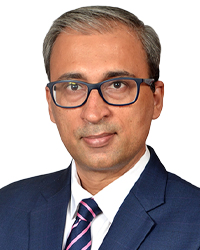
Partner
DSK Legal
Recently, Parliament has passed the National Sports Governance Act, 2025, aiming to overhaul sports administration. Eyeing the 2028 Olympics and India’s bid for the 2036 Games, the act seeks transparency, accountability and athlete-centred policies. At its core is the National Sports Board (NSB) that will set governance standards for all recognised NSFs. It will ensure compliance with financial and ethical rules, and is responsible for granting or withdrawing recognition. Only recognised federations will be eligible for government funding, a real incentive to maintain democratic processes and transparency.
The National Sports Tribunal (NST), with civil court powers, will resolve disputes about athlete selection, governance and elections. Appeal is to the Supreme Court within 30 days to ensure speed and consistency. A National Sports Election Panel of experienced electoral officials will oversee NSF executive and athlete committee elections. NSF office-holders are subject to an age limit of 70, 75 if required by an international federation. Presidents, secretaries and treasurers may only serve three terms with a maximum of 12 years. NSFs are “public authorities” under the Right to Information Act, 2005. Women must be represented in executive committees and formal athlete decision-making roles. A National Safe Sports Policy protects women and underage athletes, and a Code of Ethics will ensure sports administration integrity.
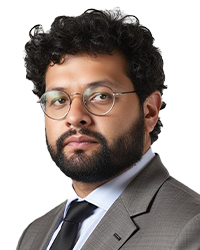
Associate partner
DSK Legal
The National Sports Governance Act has attracted criticism. The requirement that “eminent sports administrators” in ad hoc bodies have no prior association with the sport, although intended to avoid conflicts of interest, may exclude experts in favour of political or bureaucratic appointees. Another concern is that persons convicted of offences involving moral turpitude may be elected to executive committees. The NST’s appointment process is disturbing. The search and selection committee, dominated by executive appointees, may recommend only two candidates for each vacancy. This leaves the final choice to the government, potentially endangering independence.
Because it will have only three members, the NST may soon be overwhelmed. It will inherit hundreds of pending cases, hindering speedy dispute resolution. Although reserving seats for athletes and women is a positive step, the absence of capacity-building, clear roles and institutional support risks making such representation merely symbolic.
Centralising regulatory powers may face constitutional challenges for conflicting with federal principles and past court rulings on sports governance. The act may also be attacked for shielding the NST from interim injunctions by any court, including constitutional courts.
The act could adopt measures such as appointing an additional Supreme Court judge or High Court chief justice to the three-member NST search and selection committee, as happens under the Companies Act, 2013, for National Company Law Tribunal and National Company Law Appellate Tribunal cases. Giving the committee chairperson a casting vote will limit executive discretion. The NST’s size and resources should be increased to manage its caseload efficiently. Stronger centre–state co-operation is needed to extend reforms to grassroots bodies. Capacity-building for athlete-representatives, women leaders and local administrators will lead to meaningful participation. Enforcement of rules and funding standards must be consistent and impartial.
If well-implemented, the act will replace on-the-fly actions and opacity with codified governance norms, enforce term and age limits and embed transparency. It will build institutions that prioritise athlete welfare over political patronage.
With political will, robust enforcement and genuine autonomy for regulatory bodies, sports governance will match global best practices, improve Olympic prospects and make India a host for major events.
Dinesh Pardasani is a partner and Siddarth Mehra is an associate partner at DSK Legal
The authors would like to thank associate Parth Tiwari for his contribution.
 DSK Legal
1701, One World Centre
Floor 17, Tower 2B
841, Senapati Bapat Marg
Mumbai – 400 013, India
Contact details:
T: +91 22 6658 8000
E: contactus@dsklegal.com