











With the release of the Three-Year Action Plan for Drama Revitalisation (2026–2028) and the hit TV series The Lead, traditional opera has re-entered the public conversation. Its journey from theatre to television, and from professional stages to mass distribution, is reshaping both the art form and how it is shared.
As modern entertainment turns its gaze back to opera, the challenge is to determine which aspects should stay open for inheritance and which creative works should be protected as intellectual property (IP).
The question stands out in opera because the tradition is not preserved through “static” texts alone, but through oral teaching, master-apprentice pedagogy, and performance codes and stagecraft. In Peking opera, distinct role types including Sheng (male), Dan (female), Jing (painted face) and Chou (clown) operate within well defined performance conventions and hereditary schools such as the Yu and Ma schools for Sheng, and Mei and Cheng for Dan.
The perpetuation of these schools hinges on the direct, demonstrative transfer of vocal, recitative and physical techniques from master to apprentice, with learners gradually internalising the art through sustained training. In short, faithful imitation is a prerequisite for continuity.
This inherently places the transmission of opera styles at odds with contemporary IP frameworks: elements that require artistic learning, replication and perpetuation may not constitute protectable subject matter under exclusive legal rights.
Stylistic schools

Partner
Jingtian & Gongcheng
Article 3 of the Copyright Law stipulates that protectable works must be original and expressed in a definite form. A distinctive school like Mei, Cheng or Yu represents an artistic style, performance methodology and aesthetic tradition; not a concrete, fixed, identifiable expression. Extending exclusive copyright to such abstract styles would risk impeding the normal study and performance essential to opera’s ecology, constricting the master-to-disciple transmission vital for its survival.
The Intangible Cultural Heritage Law prioritises protecting the authenticity, integrity and transmissive vitality of cultural practices. A school’s lifeblood is its shared inheritance; monopolising it would be counterproductive. Therefore, abstract components – from school names and stylistic hallmarks to performance techniques and codified role conventions – must remain in the communal domain.
Derivative creative works
The fact that an artistic school cannot be monopolised does not imply that all works developed during its transmission fall outside legal protection. While Chinese opera is bound by convention and tradition, creators can feasibly instil distinct choices, structures and expressions in specific play adaptations, vocal and lyrical redesigns, musical arrangements, staging plans and pedagogical texts.
Article 13 of the Copyright Law provides that copyright in works derived from adapting, translating, annotating or arranging existing works vests in the individuals who carried out those acts. Thus, while the Mei School style itself should not be subject to exclusive control, a particular arranged libretto, a rescored melody, or newly arranged and rewritten vocal lines and lyrics based on traditional passages, may qualify for protection if they demonstrate sufficient originality.
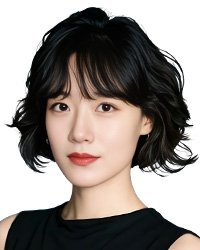
Associate
Jingtian & Gongcheng
Judicial practice offers further guidance. The copyright dispute over the vocal score of the Huangmei opera film, The Heavenly Maid and the Mortal, established that vocal composition can attract copyright protection provided it satisfies the statutory criteria for a work. Yet questions of subsistence and infringement turn on a case-specific assessment of the vocal design in question, the underlying licence arrangements, and where the evidential burden lies.
Another case concerning traditional performing arts involved Qiaohuadan, a group diabolo (classic Chinese acrobatics performance) act, which drew a similar distinction between “traditional elements” and “specific choreographic expression”. Court concerns lay not with the leading figure or diabolo techniques, but with the originality expressed in the concrete movements, positioning and sequential arrangement.
Crucially, this protection should apply only to the new, original contributions and must not be broadened to cover the underlying traditional plays, stylistic traditions or public domain material, so as to prevent the de facto monopolisation of public artistic resources in the name of editing or adaptation.
Performance and recording
Protection extends beyond the work itself. Through the neighbouring rights framework, a performer’s specific performance and its subsequent recording may attract independent protection.
The moment a performer translates a school’s stylistic tradition into an actual stage presentation, fixed in audio or visual form, that performance becomes a clearly defined rights object. Unauthorised dissemination of a complete recital recording or the unauthorised use of extracted performance clips for commercial purposes raises compound legal risks spanning performers’ rights, the rights of audio and video recording producers, and contractual licence terms.
A layered approach is therefore essential when considering IP protection within the lineage of traditional opera:
(1) Abstract elements such as school names, aesthetic styles, performance techniques and role conventions should remain open for transmission;
(2) Identifiable objects such as compiled scripts, vocal designs, score arrangements, pedagogical texts, audio-visual recordings and individual performances should be examined for protection based on their particular form and use, with reference to the respective frameworks of copyright, performers’ rights, audio-video recording producers’ rights and contractual licence terms.
Takeaways
Traditional art thrives on fluidity. To embrace open transmission is not to sanction the free appropriation of particular creations or performances, nor does safeguarding creative works amount to granting anyone an exclusive stranglehold on an entire stylistic school.
The living essence of an operatic tradition lies not in sealing it away as private property, but in the cycle of imitation, transformation and reinvention carried forward by generations of performers. Only in this way can traditional opera stay true to its heritage while advancing into new territory within the modern culture and entertainment industry.
Jiang Shen is a partner and Zhao Yao is an associate at Jingtian & Gongcheng
 Jingtian & Gongcheng
34/F, Tower 3, China Central Place
77 Jianguo Road, Beijing 100025, China
Tel: +86 10 5809 1026
Fax: +86 10 5809 1100
E-mail: jiang.shen@jingtian.com
zhao.yao@jingtian.com
www.jingtian.com