







CBLJ FORUM BEIJING 2026
Seizing emerging opportunity, Managing global risk
In times characterised by murky global developments, unchecked technological leaps and persistently high regulatory pressure, few things are more precious to businesses than face-to-face communication between their navigators and pathfinders.
While internal conferences distill leadership wisdom and AI tools aggregate massive amounts of sporadic information, true lightbulb moments that lead to progress tend to happen with the collision of various experiences and ideas – when internal barriers of corporations and industries are lifted.
CBLJ forums are tailor-made for such occasions.

Kelley Fong, CBLJ Publisher
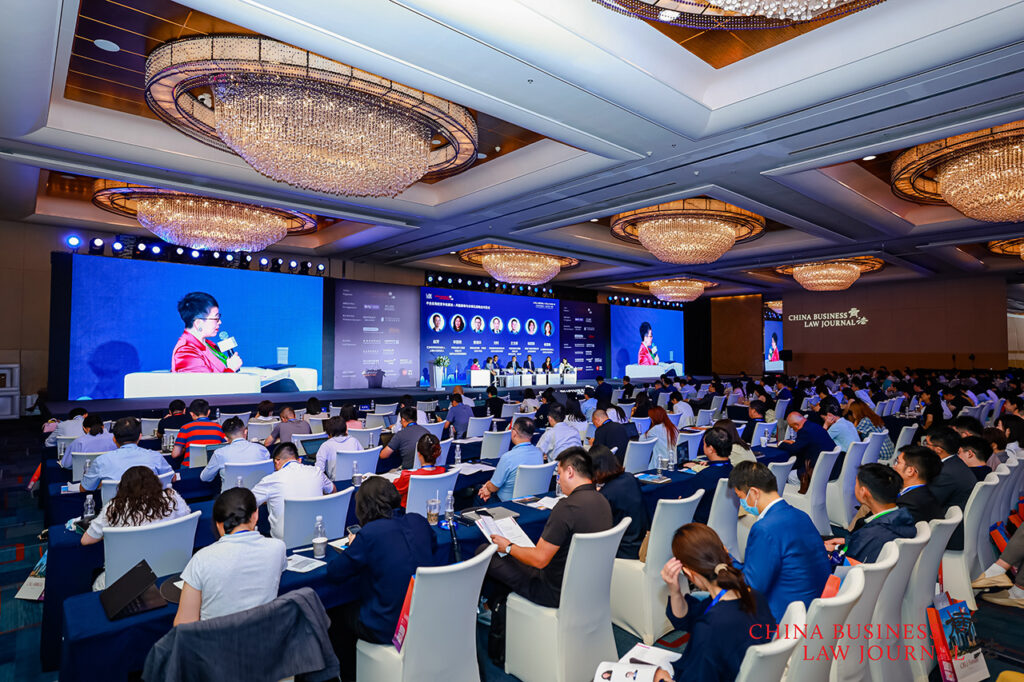
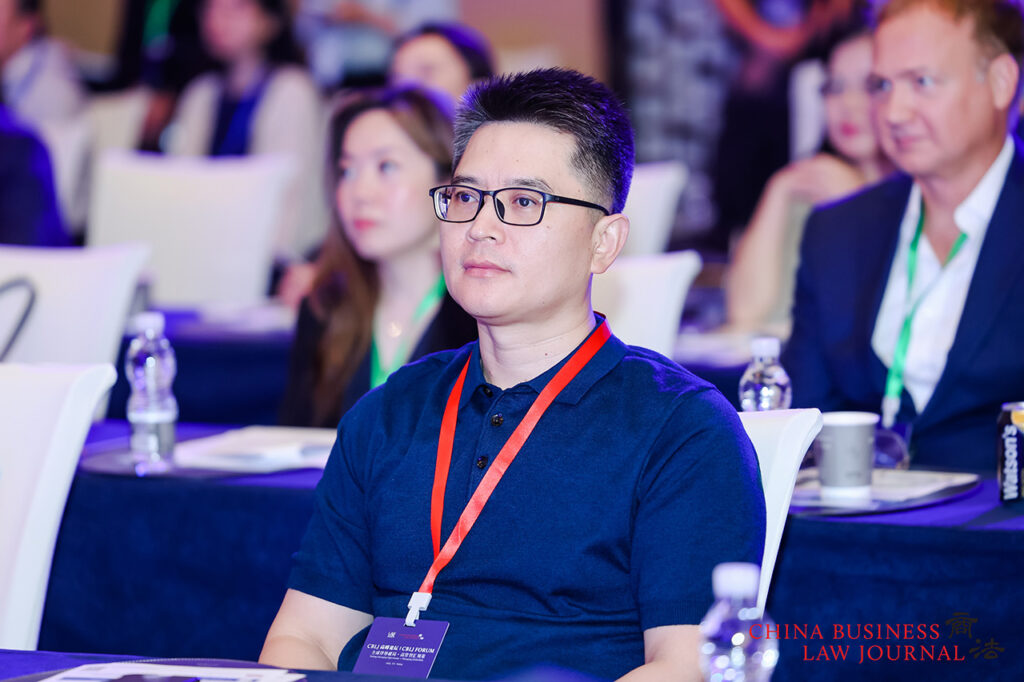
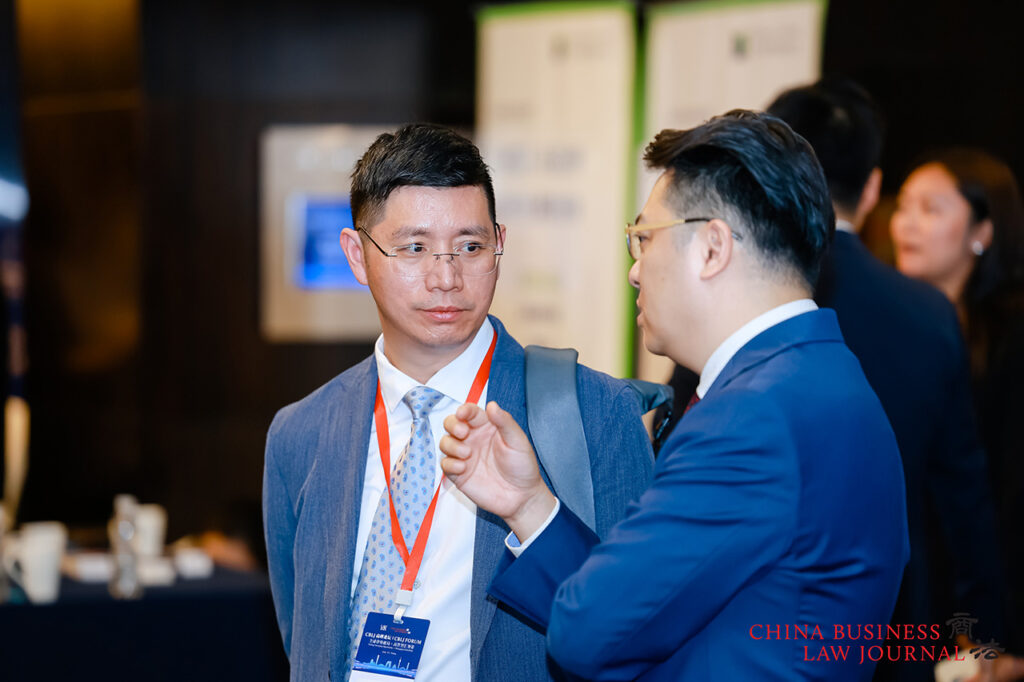
On 26 June, China Business Law Journal hosted this year’s 2026 CBLJ forum with the theme of “Seizing Emerging Opportunity, Managing Global Risk” at JW Marriott Hotel Beijing. The event attracted more than 500 senior executives, in-house counsel, and legal professionals from more than 300 Chinese and international enterprises, as well as 300,000 spectator viewers tuning in to the live broadcast.
The full-day event featured 13 panel discussions in the morning and afternoon, each dedicated to a key topic of pressing concern to enterprises today. In the evening, CBLJ hosted a closed-door banquet for attending corporate executives and in-house counsel, during which an award ceremony was held for the In-house Counsel Awards 2026, with certificates presented to attending winners.
In her opening speech, Jiang Lili, committee member and secretary-general of the Beijing Arbitration Commission / Beijing International Arbitration Court / China (Beijing) Securities and Futures Arbitration Centre (BAC/BIAC), reminded the audiences that the BAC and CBLJ have been close partners since 2013, with resonant philosophies and overlapping areas of focus. Even the forum’s many topics on that day coincided with the BAC’s recent Arbitration Culture Promotion Month.

Jiang Lili
“Leveraging CBLJ’s extensive reach across the global commercial community, we have worked together over the years to project the distinct character and advantages of Chinese arbitration, while presenting an authentic narrative of China’s rule of law and arbitral practices to overseas markets,” she said.
Additionally, she outlined the BAC’s global expansion plans, highlighting the opening of its Hong Kong centre as well as a new Central Asia branch in Karamay, north Xinjiang, alongside plans to venture further into Middle Eastern, European and Latin American markets.
She also noted recent institutional innovations, such as fast-track rules for med-arb (mediation-arbitration) integration introduced in April. Since their implementation, these rules have been applied in nearly 100 cases, with an average dispute value exceeding RMB47 million (USD6.9 million).
“Should parties desire mediation or settlement, or have already reached a preliminary settlement agreement, they can apply for this highly expedited med-arb mechanism, which encompasses a comprehensive framework that seamlessly connects a company’s internal dispute resolution mechanisms with external arbitral institutions,” she said.
The event then moved to its core segment: the panel discussions. Throughout the day, more than 70 senior legal experts and industry leaders took the stage to share their insights, practical experience and professional recommendations.
The main events of the day were the panel discussions, with four sessions held in the morning, including:
- Outbound risks and resilience in new era of globalisation
moderated by Dorsey
- The full lifecycle of PE funds
moderated by Guantao Law Firm
- Cross-border asset recovery and enforcement
moderated by Pillsbury
- China’s arbitration step-up under revised Arbitration Law
moderated by East & Concord Partners
Afternoon sessions were split into three workshops. In workshop one, the sessions were:
- Construction and reshaping of corporate anti-fraud and anti-bribery systems under tighter regulation
moderated by Dacheng Law Offices
- Resolving complex commercial disputes: risk identification, strategic planning and enforcement breakthroughs
moderated by DeHeng Law Offices
- High-net-worth individual wealth management
moderated by Jia Yuan Law Offices
In workshop two, the sessions were:
- Practical strategies for Hong Kong listing
moderated by Commerce & Finance Law Offices
- Pre-IPO investment and post-listing governance under Cayman Islands law
moderated by Harneys
- Trends and tactics in securities misrepresentation litigation
moderated by Zhong Lun Law Firm
In workshop three, the sessions were:
- Embodied AI: capital movements and risk control
moderated by Grandall Law Firm
- Trade secrets and IP protection in the AI era
moderated by Zhonglun W&D Law Firm
- Corporate compliance and data assets: from framework to balance sheet
moderated by Kangda Law Firm
We dedicate the rest of this special report to shared insights and memorable discussions from the panel roundtables.
The rest of the article will be dedicated to highlights and insights from the speakers of each session. Please click HERE for more forum images and attendee comments.
FORUM HIGHLIGHT
Special Acknowledgement
Co-organizers: BAC, BCI & BIMC
Media Partners: Sina Finance|Special Partner: LAW+
Platinum Sponsors: Dorsey; Guantao Law Firm; Pillsbury; East & Concord Partners
Sponsors: Dacheng Law Offices; DeHeng Law Offices; Jia Yuan Law Offices; Commerce & Finance Law Offices; Harneys; Zhong Lun Law Firm; Grandall Law Firm; Zhonglun W&D Law Firm; Kangda Law Firm
Morning sessions
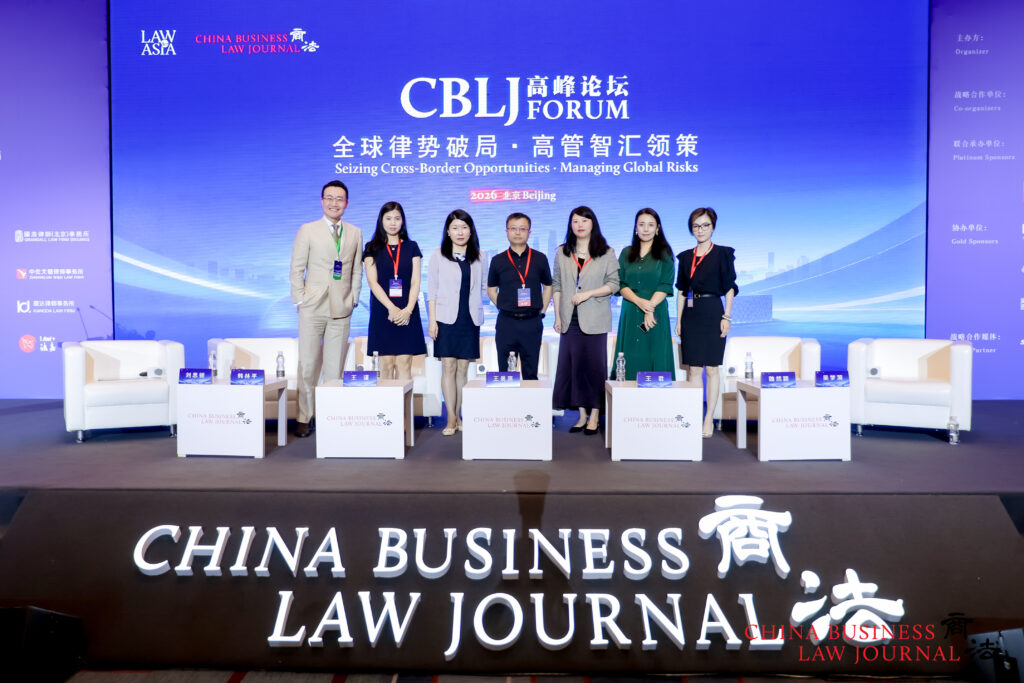
Outbound risks and resilience in new era of globalisation

Dorsey panellist:
Ray Liu, global partner, founding partner, managing partner and
chief representative of Beijing office
Institution/Enterprise panellists:
Han Linping, legal director, Bloomage Biotechnology
Lily Wang, general counsel and chief compliance officer, Beijing Electronics Holding
Leon Wang, general counsel and chief compliance officer, xFusion Digital Technologies
Joanna Wang, general counsel, board secretary and VP, InSilico Medicine
Renee Wei, legal director, Xiaomi Corporation
Wu Mengyi, vice president, Baidu

Ray Liu
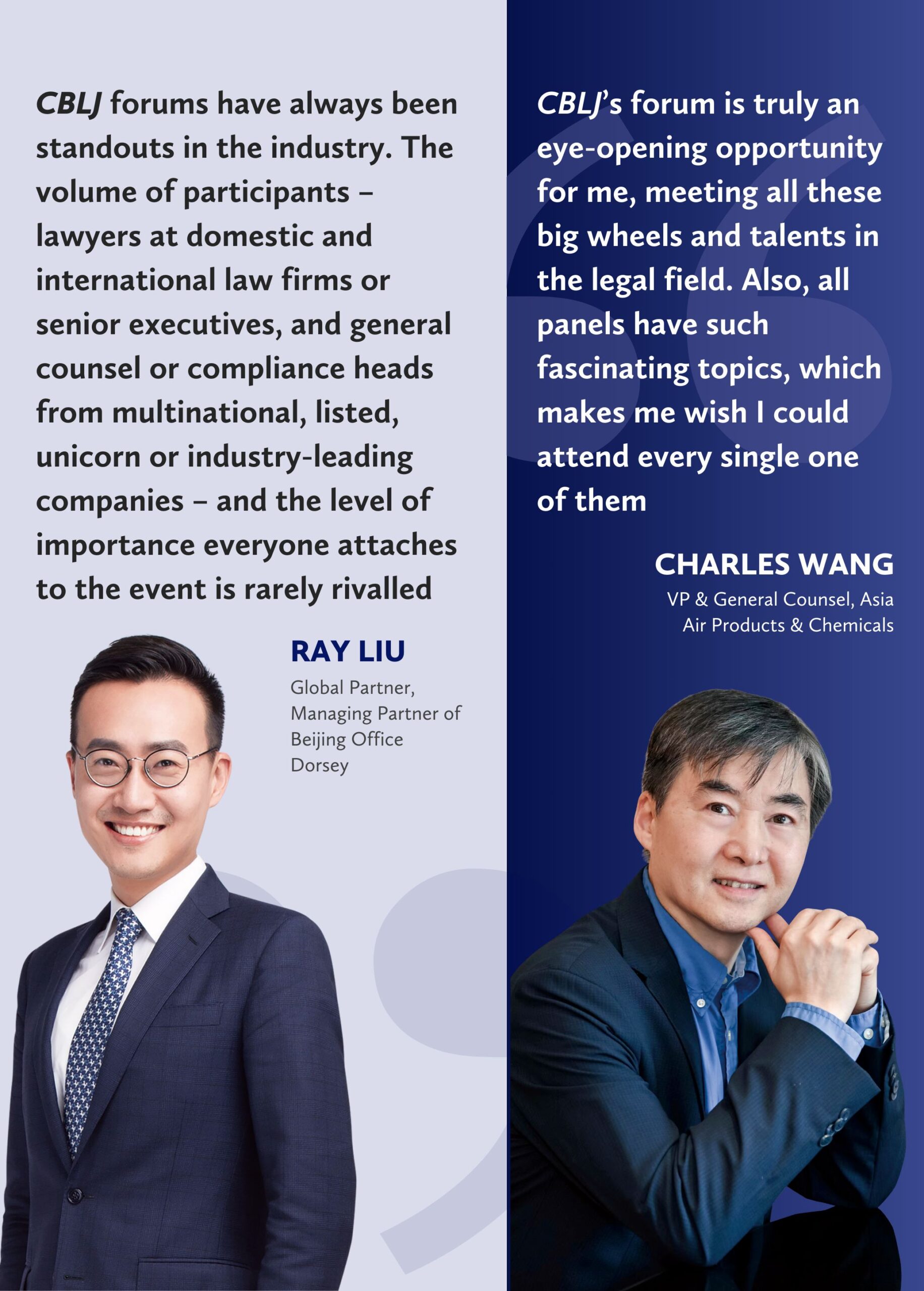
RAY LIU SAID the key issue was no longer about identifying legal risks in the traditional sense. In this unpredictable new normal, it was necessary for enterprises to take a step further and address how to proactively identify policy variables: properly harmonising systemic differences across multiple jurisdictions, and building strong yet flexible legal resilience in an environment of uncertainty to ultimately forge the core competitiveness to expand overseas steadily.

Han Linping
Drawing on practical experience, Han Linping said that while mergers and acquisitions were a shortcut for enterprises to expand into developed markets, there was a need to be vigilant regarding cross-border integration risks. Using France’s stringent labour laws as an example, she said that when replacing core overseas teams, it was necessary to comprehensively assess the knock-on effects on the supply chain and establish contingency plans by stockpiling in advance and securing backup contract manufacturers.
Stressing that major projects should never be treated as “finished once the investment has been made”, she said post-investment management was critical. Lack of management could easily allow hidden risks to go unnoticed and early intervention was the only way to prevent problems before they arose, she said.
Given significant differences between Chinese and foreign legal environments, Han shared a mindset that managers should adopt. “First, you need to understand and accept these differences – and then find ways to improve efficiency and achieve your goals within the bounds of compliance,” she said.

Lily Wang
Lily Wang analysed the severe regulatory landscape facing high-tech enterprises expanding overseas. She said Chinese enterprises not only faced stringent look-through and even retroactive national security reviews by the US, but also needed to remain vigilant against sudden dawn raids during EU anti-subsidy investigations. In the intellectual property sector, the purposes behind US Section 337 investigations had escalated from financial compensation to market exclusion, posing a potentially fatal threat to the overseas survival of enterprises.
To break through systemic barriers, Wang saidenterprises needed to build organisational resilience at the strategic level and deeply embed compliance into corporate governance. Emphasising the transformation of the legal function, she said “it is no longer merely a cost centre, but a value creation centre; it has evolved from passive risk defence to strategic positioning”.

Leon Wang
Based on his practical experience in foreign-related disputes, Leon Wang said enterprises dealing with overseas disputes needed to strengthen both internal and external capabilities: internally, by improving compliance record-keeping; and externally, by proactively securing core resources. For dispute resolution, he recommended commercial mediation as a means of moving beyond zero-sum outcomes and developing innovative solutions.
Addressing the concern that foreign-related arbitration is “final and binding”, and lacks an error-correction mechanism, he said: “We have suffered some significant losses in arbitration.”
To guard against procedural bias on the part of foreign presiding arbitrators, Wang recommended that Chinese enterprises give priority to arbitration institutions familiar with Chinese business practices and logic. He emphasised that legal teams should not fall into reflexive confrontation when handling disputes. “Dispute resolution must serve the company’s long-term objectives. It is not about winning every battle; costs and broader implications must also be considered,” he said.

Joanna Wang
Joanna Wang shared IP structuring strategies for innovative enterprises expanding overseas, drawing on her cutting-edge practices in AI-powered drug development. For high-value transactions involving intangible assets, she recommended a detailed, tiered approach to IP rights. “In our early software licensing processes, we never granted exclusive licences for the AI, thereby preserving our flexibility in the future use of generative artificial intelligence,” she said, adding that the underlying core technology must be strictly separated from rights of using specific products.
In addition, given the absence of clear regulation for AI pharmaceuticals in many countries, Joanna Wang shared the company’s experience of taking the initiative by proactively explaining technical mechanisms to regulators. She said enterprises should go beyond mere adaptation and actively engage in “rule co-creation”, thereby building long-term resilience for overseas expansion.

Renee Wei
Renee Wei said global expansion of smart hardware had evolved from a one-off market-entry review into full lifecycle compliance, covering data interactions and software iterations. Citing stark differences in child-protection rules across jurisdictions and continuously evolving EU battery regulations, she said regional compliance variations could directly affect underlying product architecture and supply-chain configuration. She added that enterprises moved beyond an obsession with “zero risk” and build comprehensive legal resilience capable of responding flexibly to rule changes across four dimensions: structure, product, contract and organisation.
Confronting the uncertainties inherent in global expansion, Wei made a compelling call for the legal function to be deeply and proactively embedded at the earliest stages of business operations. “Do not wait until legal risks have already surfaced to begin addressing them,” she said. “Instead, integrate a thorough understanding of the target jurisdiction’s laws and regulations across the entire product lifecycle, beginning at the design stage itself.”

Wu Mengyi
Wu Mengyi said overseas expansion of cutting-edge businesses such as autonomous driving required both consolidating domestic compliance foundations – such as data and technology exports – and conducting forward-looking research into the laws and policies of target markets. Pointing to Dubai as an example, she said completely distinct legal systems between the Chinese mainland and free-trade zones in that emirate would directly affect the structural planning of outbound enterprises and needed to be analysed in advance.
Besides, Wu said enterprises should not just passively adapt to rules, but actively participate in local legislative development, promoting and exporting China’s successful legislative practices in the field of intelligent connected vehicles overseas to forge a strong relationship of trust.
Discussing how to address complex challenges when expanding overseas, she said corporate governance resilience was the foundation, and active participation in local legislative development and policy recommendations contributed to building long-term competitiveness.
Photos

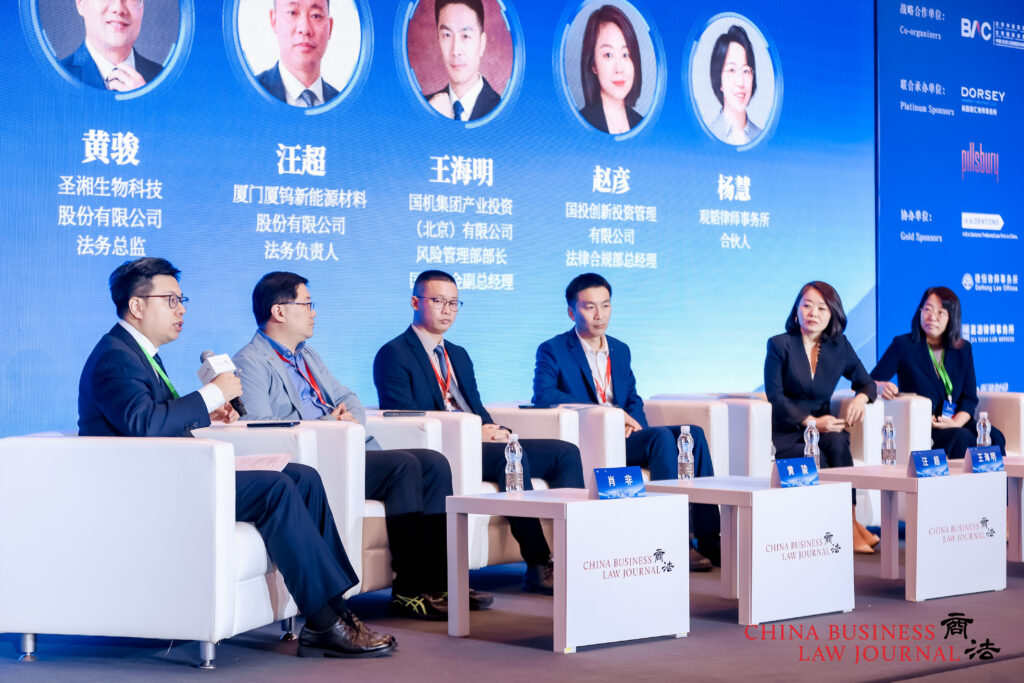
The full lifecycle of PE funds

Guantao Law Firm panellist:
Xiao Fei, Partner
Yang Hui, Partner
Institution/Enterprise panellists:
John Huang, general counsel, Sansure Biotech
Wang Chao, legal director, XTC New Energy
legal director, XTC New Energy, director of risk management department, Sinomach Industrial Investment; deputy general manager, Sinomach Capital
Emma Zhao, general manager, legal & compliance department, SDIC Fund Management

Xiao Fei
XIAO FEI ANALYSED the changes in private equity investment logic from two dimensions: macro-level shifts and rule reconstruction. As China-US tensions reshaped supply chains, capital had already broken free from its local confines and was now focusing on targets with global competitiveness. As enterprises expanded abroad, the domestic regulatory system was also undergoing a shift, and the industry was set to enter an era of the new “1+N+X” regulatory policy framework, he said.
“Regulation of our private equity funds has undergone another restructuring,” he said. “It has flipped from self-regulation as the mainstay, supplemented by administrative regulation, to administrative regulation as the mainstay, supplemented by self-regulation.”
Faced with such drastic internal and external changes, he said, in-house counsel need to develop their skills and knowledge to build solid compliance resilience for enterprises.

John Huang
Based on his hands-on experience with industry funds, John Huang offered an in-depth analysis of how to balance fundraising with regulatory requirements in the biomedical sector. Addressing the tightening of terms imposed by government limited partners (LPs) – including reinvestment obligations, buyback provisions and value adjustment mechanisms – he said traditional rigid buyback clauses had become detached from commercial reality and were gradually being replaced by more inclusive and flexible fault-tolerance mechanisms.
In his view, this shift meant that rather than fixating on a single exit metric, practitioners should place greater emphasis on end-to-end process management, foster industrial ecosystem synergy and, when selecting projects, give due weight to both ecosystem alignment and commercial maturity.
By designing flexible arrangements at the fundraising, post-investment and exit stages, enterprises could both ensure the safe exit of state-owned assets and accommodate the growth trajectory of private innovation enterprises. Huang said state capital guidance funds should serve as a “source of fresh momentum” for innovation, with the ultimate goal of achieving a two-way win-win between the fulfilment of the state capital’s mission and investee companies’ development.

Wang Chao
Speaking from the perspective of an industrial fund, Wang Chao said using a fund as an investment vehicle facilitated unified management far better than the traditional model of multiple parties co-investing as parallel shareholders. “We established this fund to serve the listed company’s core business, rather than strictly to generate a profit,” he said.
Consequently, target projects suffered less interference from divergent shareholder demands, he said. This streamlined structure also allowed XTC New Energy to more seamlessly integrate its technical and managerial expertise during post-investment management.
For project selection, he advocated focusing on familiar industries while keeping pace with cutting-edge technological advancements and ESG compliance trends. In the post-investment phase, he said leveraging technology helped drive cultural integration, paving the way for the gradual implementation of compliance and risk management systems.

Wang Haiming
Wang Haiming pointed out that the capital providers for central SOE (state-owned enterprise) funds were predominantly multi-tiered state entities. While central SOEs pursued strategic positioning and industrial synergy, local state capital prioritised regional industrial development, reinvestment and investment promotion. This misalignment of priorities could easily lead to difficulties during term negotiations and subsequent execution. Consequently, he said legal departments urgently needed to co-ordinate and balance the interests of all parties during the early stages of fundraising.
Addressing the friction surrounding valuation adjustment mechanism (VAM) agreements and buyback clauses, he said central SOEs tended to be more flexible in execution. Although they implemented fault-tolerance mechanisms, they had also introduced accountability measures, meaning that practical operations still required a case-by-case approach to balance capital security with technological innovation. To resolve exit challenges, he said investments should be shifted to earlier stages and embed diversified exit pathways, such as industrial chain M&A, into agreements at the outset.

Emma Zhao
Speaking from the perspective of a private fund manager, Emma Zhao analysed compliance strategies across the full circle of private investment, fundraising, investment, management and exit. At the fundraising stage, when navigating the diverse demands of various LPs, she said legal departments needed to flexibly balance legal arrangements for reinvestment and local industrial integration against the backdrop of Document No. 1 of the General Office of the State Council, titled Guidelines on Promoting the High-Quality Development of Government Investment Funds. To mitigate risks associated with a manager’s performance of duties, she said escalate the authority to determine a defaulting partner to the partners’ meeting.
When it came to the post-investment management stage, she said: “We have never treated the terms as a safety net for our investments.” In her view, legal departments could not rely on pursuing accountability through terms after the fact; rather, they needed to build a full lifecycle risk control system, mitigating risks before terms were triggered through prudent pre-investment valuation and deep post-investment empowerment.

Yang Hui
Yang Hui examined the logic behind the evolution of terms in current sci-tech investments from a transactional lawyer’s perspective. In the technology sector, particularly in semiconductors and AI, deal risk control had clearly shifted towards “soft” binding, where R&D or commercialisation milestones replaced traditional, rigid VAM agreements, she said. Although state-owned capital investors still needed to retain buyback clauses for compliance reasons, the scope of the clauses’ actual application was increasingly focused on extreme scenarios such as moral hazard or financial fraud.
In terms of corporate governance, she said bargaining power had shifted in the market, and investors’ attitudes towards the founding team’s control moved from restriction to tolerance. “Even when the founding team’s equity stake was significantly diluted in early financing rounds, investors gradually came to accept arrangements where founders maintained strategic decision-making authority through super-voting rights,” Yang said. “This shift in structural design reflects the investment community’s deeper understanding of the boundaries of innovation.”
Photos
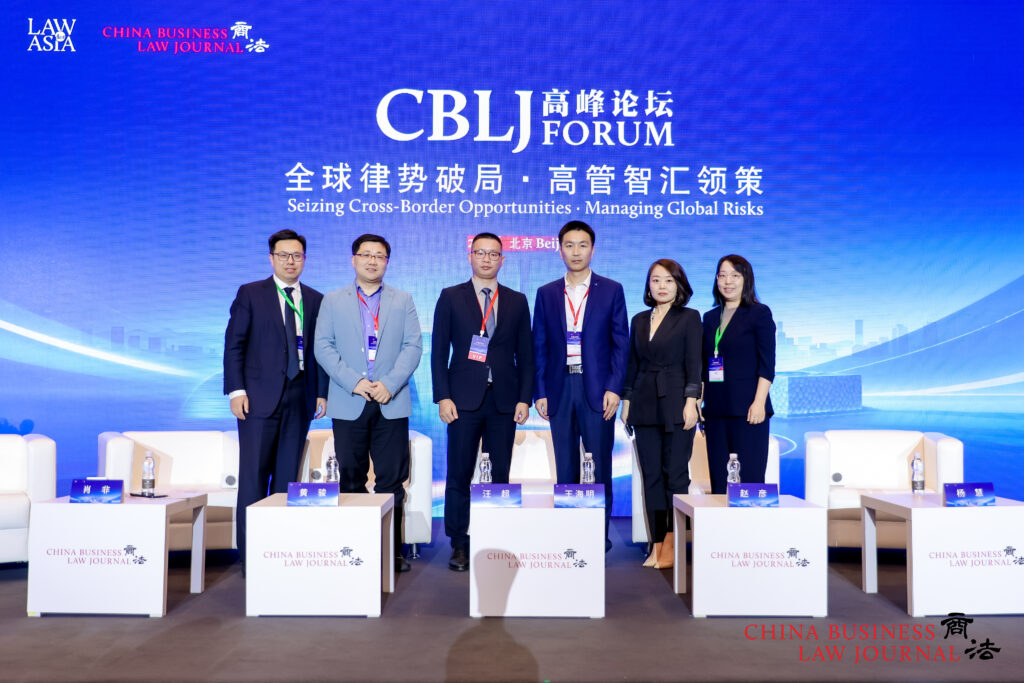
Cross-border asset recovery and enforcement

Pillsbury panellists:
Geoffrey Sant, co-chair of China practice, litigation partner
Michelle Ng, chief representative of Hong Kong office, litigation partner
Institution/Enterprise panellists:
Sun Xiaoqing, former senior legal expert, Sinopec Group; former general counsel, Sinopec International
Charles Wang, vice president & general counsel – Asia, Air Products and Chemicals (China) Investment
Shirley Pan, director of legal affairs department, China North Industries Corporation

Geoffrey Sant
GEOFFREY SANT SAID Chinese mainland enterprises often faced protracted timelines, high costs and recognition refusals when enforcing mainland judgments abroad. To address this issue, he advises companies to leverage insolvency proceedings to break the deadlock.
While the standard route – securing a judgment before seeking recognition and enforcement – consumes much time and capital, forcing the debtor into bankruptcy allows creditors to participate directly without waiting for formal judgment recognition, which compresses timelines and cuts costs.
Drawing on his cross-border practice, Sant said that under the US legal framework, counsel could subpoena bank statements directly to trace the flow of funds without prior judicial leave.
In addition, when dealing with overseas fraudsters, he urged in-house counsel to assert broader consequential damages stemming from the misappropriation. This can persuade judges to award higher damages or default interest, enabling companies to secure compensation far exceeding their initial losses.

Sun Xiaoqing
Sun Xiaoqing said cross-border asset recovery must yield tangible returns. When facing adversaries with hidden or depleted assets, in-house counsel should treat the pursuit as a commercial venture, balancing risk against reward while pooling personnel, capital and intelligence. “Asset tracing must be front-loaded,” she said. “Don’t wait for a favourable judgment to act.”
Sun offered three practical tips. First, dynamically adapt enforcement strategies to avoid hasty follow-up investments. Second, widen the asset search and enforcement toolkit: audit unpaid shareholder capital, fiduciary duties or executive liabilities; escalate civil disputes into criminal or tort litigation; and apply pressure via liquidation and freezing orders. Third, adopt a fight-and-talk strategy, using legal leverage to force a settlement while managing limitation periods to secure the optimal commercial outcome.

Charles Wang
Charles Wang argued that the best safeguard in cross-border asset recovery was prevention, which far outweighed a retrospective cure. To avoid a hollow victory where the debtor was asset-less, he advised companies to embed guarantees or security clauses into the first drafts of contracts. This ensures that even in a subsequent insolvency, creditors retain priority rights or the leverage to pursue guarantors.
On enforcement tactics, Wang cited cases showing that where conventional tools like bank freezes failed, prior due diligence allowed legal teams to pivot to freezing land or equity. Threatening operational disruption via equity freezes can quickly force debtors back to the negotiating table.
Addressing Chinese mainland firms’ vulnerabilities in US litigation, he warned that in-house counsel must master discovery rules: destroying or hiding data invited judicial sanctions or adverse inferences. Finally, he recommended engaging seasoned external counsel early and exploring third-party funding to offset high litigation costs.

Shirley Pan
Drawing on her practice at a state-owned enterprise, Shirley Pan said that despite regulatory mandates to exhaust all legal and enforcement remedies in cross-border asset recovery, litigation and arbitration remained commercial transactions. She urged companies to conduct comprehensive feasibility assessments before acting – weighing the probability of success and recovery against an input-output ratio that accounted for legal fees, executive time and goodwill.
To counter protracted decision making that risks missing recovery windows, Pan suggested securing internal and external expert opinions to expedite approval of cost-effective solutions. Strategically, she offered two tips: first, copy external counsel on sensitive communications to invoke attorney-client privilege during US discovery; second, deploy creative commercial structures, such as using an offshore vehicle to buy out non-favourable judgments, mirroring litigation funders, to monetise claims or force settlements without inviting extortionate counter-offers.
Finally, she warned that enforcement under the New York Convention must account for local public policy variations, advising firms to pre-empt non-recognition risks by mapping out alternative jurisdictions.

Michelle Ng
Michelle Ng observed that many Chinese mainland firms mistakenly celebrated premature victories after winning an arbitration, missing the optimal window for foreign enforcement by stalling over domestic negotiations or haphazard asset searches. Urging legal teams to mind enforcement deadlines, she said: “The limitation period in the US is three years, running strictly from the date of the award.”
Under US law, she said this three-year limitation period was not paused or suspended by ongoing negotiations or parallel proceedings in the Chinese mainland; once it expired, enforcement rights would be permanently lost.
Operationally, Ng advised counsel to assess the correlation between the claim value and public assets immediately on securing an award, moving decisively to freeze property given debtors’ propensity for buying US real estate. Additionally, she said securing third-party funding to ease financial strain requires verified asset leads and a clear claim valuation as a negotiation prerequisite.
Photos


China’s arbitration step-up under revised Arbitration Law

East & Concord Partners panellists:
Bill Li, managing partner, director of the management committee of Beijing office
Rocky Ji, managing partner, head of dispute resolution department
Institution/Enterprise panellists:
Cao Haiyang, senior in-house counsel, arbitration, legal AI expert, investor
Duan Tao, executive deputy general manager, general counsel, chief compliance officer, China Renaissance Securities
Janet Jiang, legal director, Concord New Energy Group
Lily Li, arbitration, Beijing Arbitration Commission
Zhang Haoliang, deputy secretary-general, Beijing Arbitration Commission
Marco Chung, group head of legal, CITIC Securities International

Bill Li
BILL LI SAID the overhaul of the Arbitration Law fundamentally reshapes both statutory provisions and contract drafting. Regarding clause restructuring, he highlighted two core institutional shifts: the introduction of implied arbitration agreements – where failure to object coupled with a written record constitutes agreement – and a revamped jurisdictional review mechanism.
By establishing the tribunal’s power to rule on its own jurisdiction – according to the Kompetenz-Kompetenz (competence-competence) principle – this revision profoundly impacts how general counsel, external lawyers and arbitral institutions draft, apply and review arbitration clauses.

Cao Haiyang
Drawing on his dual experience as an arbitrator and general counsel, Cao Haiyang offered two practical recommendations. First, if jurisdiction is altered via a subsequent agreement, the change must be uniformly reflected across all related documents to prevent conflicting jurisdictions from complicating proceedings. Second, when drafting arbitration clauses, parties must clearly distinguish between the arbitral institution, the venue of hearings and the seat of arbitration, adding that “the seat is the most critical of these three factors”.
To boost efficiency, he said firms should leverage arbitration rules at instutitions by stipulating expedited procedures regardless of the claim value, selecting cost-effective fee structures or explicitly excluding specific categories of presiding arbitrator candidates.
He added that international arbitration demanded careful selection of expert witnesses, whose prior stances and leanings must be vetted early to safeguard corporate interests.

Duan Tao
Duan Tao said that under the new Arbitration Law, the use of implied arbitration clauses in securities offering documents, such as prospectuses, had received statutory recognition. Given the sheer volume of securities filings, he said: “Consistency is paramount when designing dispute resolution clauses across documents.”
Addressing overseas listing compliance, Duan sai that following the 2023 abolition of mandatory articles for Hong Kong-listed firms, domestic companies expanding or listing overseas must proactively embed and retain arbitration clauses in their articles of association.
Turning to online arbitration, he said the new law preserves party autonomy: if one party explicitly objects to virtual hearings, the institution must arrange an in-person session. The virtual model also poses fresh challenges to the principle of confidentiality.

Janet Jiang
Janet Jiang highlighted the practical benefits of the new Arbitration Law. Businesses previously hesitated to choose arbitration due to concerns over enforcing interim measures and evidence preservation, she said. However, the new law’s mandate that courts “must promptly handle” applications for interim relief significantly eased corporate anxieties.
Reflecting on her group’s overseas project development, Jiang said choosing host-country institutions historically inflated enforcement costs. With the new law permitting greater freedom in selecting the seat of arbitration, outbound enterprises should proactively choose reputable domestic institutions for international disputes.
Additionally, welcoming the codification of implied arbitration clauses, she said it resolved instances where institutions rejected cases despite mutual intent simply due to the lack of a single, formally executed signature page.

Lily Li
From the perspective of the internet and digital economy sector on integration of the new Arbitration Law with emerging technologies, Lily Li said arbitration’s efficiency, convenience and confidentiality aligned perfectly with the internet, AI and blockchain. This alignment envisioned a trend where “future arbitration agreements are hosted on-chain, triggering automatically once predefined conditions are met”, she added.
The institutional trend was towards virtual hearings and tech-driven evidence submission such as validating blockchain and hash verification, submitting evidence via APIs, and adopting “confidentiality advisers” alongside “1+1+N” procedural rules for cross-border disputes, Li added.
Turning to global expansion, she highlighted Hong Kong’s strategic advantage as the primary gateway for Chinese mainland capital, urging outbound businesses to leverage internationalised domestic platforms like the Beijing Arbitration Commission (BAC) Hong Kong Centre.

Zhang Haoliang
Zhang Haoliang analysed the systematic evolution of building corporate legal resilience under the new Arbitration Law. Regarding contract clauses, he said the new law focused on exploring the true intent of the parties, relaxing formal signing requirements as long as a written record existed. Practically, he added that the BAC’s new “1+1+N” rules offered even broader flexibility in establishing valid agreements.
Zhang added that the new law’s explicit provisions on act preservation, pre-arbitration interim measures and judicial assistance in evidence gathering offered robust remedies for corporations. “Through system integration, the BAC now routes interim relief applications to courts within a single day,” he said.
Looking ahead, he sais the internationalisation of Chinese mainland arbitration required alignment with global demands, strengthening internal capabilities and promoting outbound expansion.

Marco Chung
As an international M&A and investment banking legal head, Marco Chung analysed the core value of the “seat of arbitration” for outbound enterprises under the revised law. “The choice of seat dictates whether clawback rights or valuation adjustments (VAM) can be enforced,” he said. Chinese mainland firms often lost overseas disputes due to procedural errors, wrong choice of relief mechanisms or arbitrators lacking cultural context.
Chung gave three practical tips: first, select the right seat; second, choose the right arbitrator, namely “someone who understands Chinese culture and corporate operations, yet possesses practical common law experience”; and third, opt for familiar, trusted and reputable arbitral institutions.

Rocky Ji
Offering practical insights on institutional selection and the evolution of interim measures, Rocky Ji told general counsel to balance an institution’s administrative oversight with the tribunal’s discretionary autonomy when drafting clauses.
Addressing a core pain point in cross-border disputes, Ji acknowledged difficulties in enforcing domestic act preservation and a structural gap regarding cross-border interim relief. “Emergency arbitrator decisions or interim measures issued by offshore institutions are not recognised, a gap we hope future developments will bridge,” Ji said.
Consequently, he said internationalisation of Chinese arbitration hinged on user sophistication. Legal teams must master jurisdictional variations and judicial support levels to navigate complex international environments.
Photos

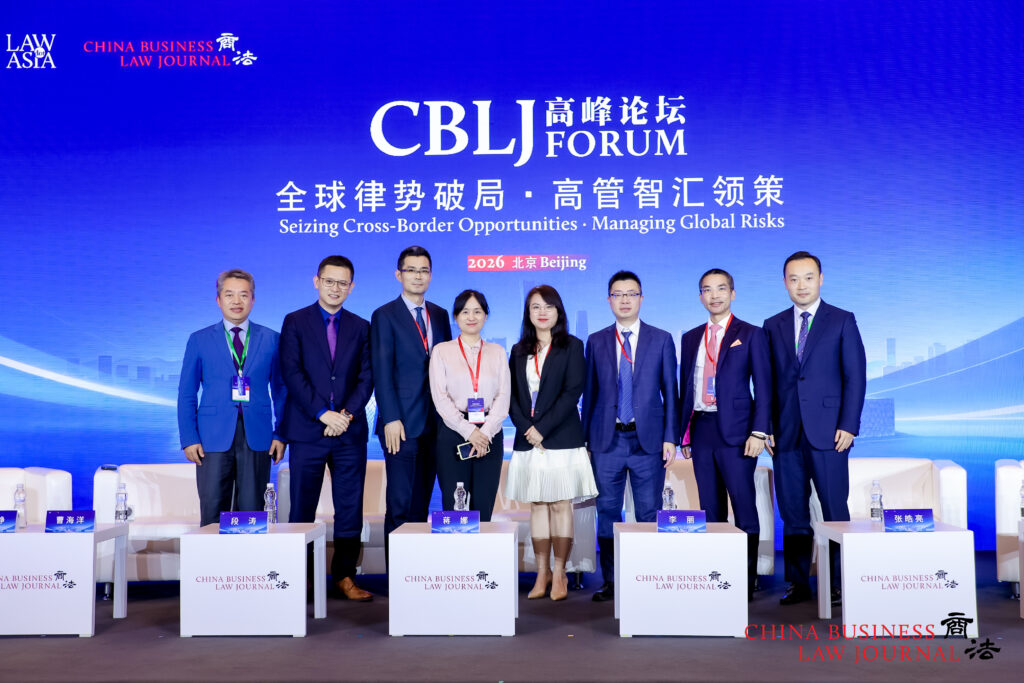
Afternoon session | Workshop 1
Construction and reshaping of corporate anti-fraud and anti-bribery systems under tighter regulation
Construction and reshaping of corporate anti-fraud and anti-bribery systems under tighter regulation

Dacheng Law Offices panellists:
Lou Qiuqin, senior partner and head of criminal law practice group
Ma Lang, senior partner and co-head of criminal law practice group
Institution/Enterprise panellists:
Cui Lisha, general manager of legal department, Glodon Company
Hou Huanan, general manager of legal, compliance and risk control department, Dajia Insurance Group
Wang Wenbin, director, China and Asia Pacific legal, Valmet
Xie Chenyang, vice president and chief legal officer, Foxconn Industrial Internet
Zhang Liming, senior vice president, So-Young International

Lou Qiuqin
LOU QIUQIN MADE the point that following amendments to the Criminal Law and a lower threshold for case filing, criminal risks facing employees in respect of fraud and bribery had grown considerably.
Speaking from a practitioner’s perspective, she said building defensive barriers was imperative. On practical compliance investigation methods, she said legal teams should not tip off suspects during the preliminary fact-finding stage, and they had to secure documentary evidence first.
“Putting employees behind bars may not be the ultimate goal for most companies,” she said. “The core objective is to protect the company’s assets and ensure normal operations, so that employees stay loyal and serve the business.”

Cui Lisha
Cui Lisha, drawing on the particularities of digital enterprises’ B2B and B2G operations, shared first-hand experience in tightly integrating anti-bribery measures with tender compliance. The buffer zone for private firms was being erased and companies needed not only top-down efforts to build a “compliance risk map”, but also tighter monitoring across key lines such as expenditure and revenue.
On the perennial difficulties of identifying leads and securing evidence for case filing, she said the limited investigative powers of companies often left them short of proof. “Getting a case filed, prosecuted and ultimately convicted is a long process that requires close internal and external co-ordination,” she added.

Hou Huanan
Hou Huanan, drawing on the distinctive features of state-owned financial insurers – with their dense concentration of capital, personnel and transactions – analysed the mounting pressures on corporate “dual-anti” efforts during the tighter regulatory cycle. Under the dual oversight of financial regulators and state-owned discipline bodies, multiple supervisory channels had formed an integrated loop, and industry compliance was accelerating into the deep end where administrative and criminal penalties converged,” Hou said.
Regarding the specific compliance pain points in insurance, he added: “The main channel for fraud and bribery in insurance is the falsification of expenses. Insurers have long been expense-driven and false expense booking is a major problem, closely tied to commercial bribery.”

Wang Wenbin
Wang Wenbin, drawing on management experience of his multinational company over two separate centuries, argued that successful companies relied on culture rather than mere rules. He presented a global compliance methodology based on “two maps”. Under tighter regulation, he said, firms need not reinvent the wheel; they could adopt mature compliance frameworks and, using the Corruption Perceptions Index, divide markets into red, grey and green zones.
He said many emerging markets fell into the grey zone (below 50 points), and the real value of compliance professionals would bein managing the grey zone well and avoiding a slide into red. “For companies looking to go global, think globally, but act locally,” He said

Xie Chenyang
Xie Chenyang analysed the acute difficulties of “filing cases and securing convictions” in anti-fraud work. He acknowledged that, owing to the sophisticated nature of senior-executive crimes and limited police resources, the conviction rate for private-sector complaints remained persistently low. Corporate investigators faced huge pressure and had to break down silos by strengthening internal co-ordination among legal, audit, compliance and HR teams, while also leveraging external expertise from top law firms.
Looking ahead, he emphasised the new challenges brought by technology. “The future pain point will be the enormous pressure of business-end prevention and control driven by technology – AI will expose us to huge data and cybercrime risks,” Xie said.

Zhang Liming
Zhang Liming approached the issue from the angle of internal governance and cross-departmental collaboration. Zhang said building a deterrent internal control mechanism was critical to preventing fraud, and recommended separating legal and investigative functions. He acknowledged that internal investigators had a natural advantage in identifying business risks and conveying management intent. But they faced real constraints in evidence gathering and case filing and therefore needed high-calibre external support to ensure overall legality.
On the strategic purpose of investigating fraud, he said: “Companies often pursue fraud cases to set an example. If, after all that effort, the culprit emerges unscathed – or cannot even be dismissed – it is better not to have started.”

Ma Lang
Ma Lang, drawing on more than 20 years of experience dealing with public security authorities, said corporate anti-fraud efforts had to address not only the practical difficulties of evidence collection and reporting, but also communication with senior management. Given tight regulation and limited investigative powers, legal teams’ primary task was to “manage the boss’s expectations” on a sound professional basis and avoid overpromising, Ma said.
On longer-term system building, he offered advice on securing evidence from the outset. “You need to anticipate what traces an employee’s crime might leave, obtain authorisation when they join, and promptly seal electronic evidence – that will help greatly when you later report the case to the authorities,” he said.
Photos
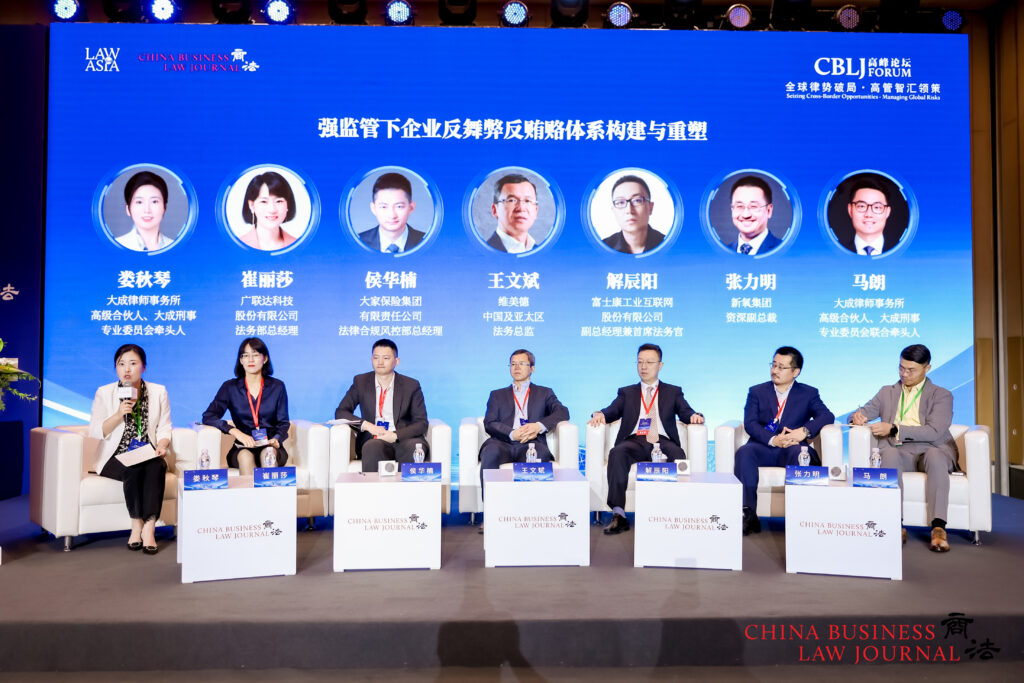

Resolving complex commercial disputes: risk identification, strategic planning and enforcement breakthroughs

DeHeng Law Offices panellists:
Ji Buyinnasen, partner
Wang Bo, partner, executive member of dispute resolution committee, deputy secretary-general of executive business centre
Institution/Enterprise panellists:
Kenny Wu, company secretary, head of risk control & compliance, China Grand Prosperity Investment
You Huan, deputy director of legal & compliance department and deputy director of risk control at the international business department, China Power Engineering Consulting Group
Zhang Xiangnan, former general counsel and chief compliance officer, China Nonferrous Metal Mining Group
Marco Chung, group head of legal, CITIC Securities International

Kenny Wu
KENNY WU SAID that in high‑frequency disputes such as valuation adjustment mechanisms and share repurchase arrangements, a prevailing pain point for companies was that even a legal victory often failed to make good their losses.
But he said the new Company Law significantly strengthened the duties and liabilities of shareholders, directors, supervisors and senior management, offering a potential breakthrough in addressing this dilemma.
Rather than pursuing shareholder and director liability solely as an ex-post remedy, Wu said: “Companies must consider from the outset how to identify and lock in the relevant rights, obligations and responsible parties, preserve evidence in advance, and genuinely apply the new rights conferred by the rules throughout the entire process.”

You Huan
You Huan said overseas cases were increasingly characterised by diversified parties and more complex legal relationships and applicable legal rules. In response to multi‑party disputes, she said that instead of pursuing a one‑size‑fits‑all solution, companies should disentangle the various lines of dispute and legal relationships, and engage specialist counsel accordingly.
At a conceptual level, she said in‑house counsel and senior management needed to adopt a pragmatic approach to commercial risk control and move beyond a zero‑sum mindset. “When facing complex cross‑border commercial disputes, many companies would prefer to spend 30% of the time to recover 80% of the amount, rather than spend 300% of the time to recover 100%.”
She added: “Taking a big‑picture view in cross‑border disputes is far more pragmatic than focusing on marginal gains.”

Zhang Xiangnan
Drawing on the overseas experience of central state‑owned enterprises (SOEs), Zhang Xiangnan said companies should adopt a systematic approach to cross‑border disputes. “Strive to avoid litigation, do not fear litigation and seek to prevail when litigation is necessary,.” Zhang said.
Prevention of overseas disputes should begin at an earlier stage, with careful control over business decision‑making, partner selection, contract drafting and contract performance, he said. Where litigation cannot be avoided, Zhang said companies should “choose the right battleground” and consider gradually shifting arbitral venues from the Atlantic region to the Asia‑Pacific or domestic jurisdictions where suitable.
On the question of what it means to “win”, he said this should be assessed in light of the specific circumstances of each case. “We need to present sound legal arguments and also conduct an economic assessment, and set realistic objectives.”
Marco Chung
Marco Chung said many risks were effectively determined at the contract‑signing stage, so companies should pay close attention to contract review, particularly dispute resolution clauses, even after lengthy commercial negotiations.
Referring to property preservation measures, he said the court’s 48‑hour preservation mechanism depended on advance preparation that could take weeks or months. At the enforcement stage, Chung said the choice of arbitral seat was important, and companies should select a jurisdiction where awards could be enforced more efficiently. “If the seat is not appropriate, or enforcement is difficult due to geopolitical factors, that may create additional disadvantages in the global environment of 2026,” he said.

Ji Buyinnasen
Ji Buyinnasen cited DeHeng Law Offices’ handling of an overseas construction dispute involving a central SOE – when the firm assisted the client through arbitration, litigation and applications for anti‑suit injunctions, and the matter was ultimately resolved through settlement. He said in‑house counsel should familiarise themselves with legal tools that were less commonly used domestically – such as anti‑suit injunctions – and consider approaches beyond a zero‑sum framework. “Dispute resolution, whether through litigation, arbitration or mediation, is a means rather than an end. The objective is to protect the client’s interests and achieve the client’s goals,” he said.

Wang Bo
Wang Bo said that, to address the “last mile” challenges in enforcing domestic commercial disputes, companies might extend proceedings to add shareholders, directors and senior management as liable parties. Where a judgment debtor is unable to repay debts and has no assets available for enforcement, he said in‑house teams and lawyers should consider initiating procedures to add shareholders and directors or senior executives. Wang said lawyers should begin preparing evidence at an early stage to support such applications. “We should make full use of court investigation orders to obtain and review company bank records and accounts and also require enforcement respondents to provide financial statements in order to identify relevant evidence,” he said.
Photos


High-net-worth individual wealth management

Jia Yuan Law Offices panellists:
Terri Wang, senior adviser
Institution/Enterprise panellists:
Iris Chen, head of legal, BNP Paribas ABC Wealth
Annie Ling, partner and general counsel, Micro Connect
Xu Yehong, legal director, Nuctech
Joe Zhou, deputy president, general counsel and senior managing director, China International Capital Corporation

Iris Chen
IRIS CHEN SAID that current regulatory tightening aimed to align risk management frameworks with international standards, boosting global investor confidence and expanding the financial market. Facing a regulatory trend characterised by “finer, more comprehensive and substance-over-form” scrutiny, she said executives and legal teams had to be thorough. “The essence of look-through regulation is substance over form. When reviewing transaction structures, we must look beyond literal regulatory wording to see whether similar models face comparable regulatory requirements overseas,” Chen said.
She said the primary goal of her firm’s global asset allocation was not to chase windfalls, but rather to minimise yield volatility – and doing so would strike a better balance between risk mitigation and business expansion.

Xu Yehong
Xu Yehong said many Chinese enterprises currently attempted to evade the long arm of jurisdictions by splitting entities or changing addresses via offshore shell companies. However, she said such “clever” manoeuvres prove ineffective against the look-through, long-term scrutiny of various jurisdictions. Instead, corporations and executives must establish genuinely compliant ring-fencing structures.
Regarding structural design and risk isolation for outbound enterprises, she said: “Founders should initially establish a domestic family platform dedicated solely to receiving post-tax dividends from other investment vehicles. It must not engage in equipment sales, data processing, or operations, nor should it provide guarantees for any other entity.”
She said that only by first erecting this clean defensive wall, followed by multi-tiered, mutually independent overseas subsidiaries combined with documented collective decision-making, could firms maximise the intergenerational protection and orderly inheritance of family wealth.

Terri Wang
Terri Wang considered the perspective of increasingly stringent domestic and global tax regulations –particularly Hong Kong’s implementation of the OECD’s expanded Common Reporting Standard (CRS 2.0) framework, with enhanced due diligence and reporting procedures to address emerging risks, expected to take effect from 1 January 2028.
She said corporate tax risks were rapidly spilling over to executives, potentially leading to personal criminal liability in severe cases, and in the CRS 2.0 era, tax reporting in Hong Kong would no longer be voluntary, but mandatory and subject to multilateral exchange.
“If an individual qualifies as a tax resident in two or more jurisdictions, [tax information] will be exchanged with the relevant tax authorities, making it difficult to hide such data anywhere,” she said.

Annie Ling
Annie Ling shared her firm’s compliance experience at Micro Connect, an innovative exchange group primarily focused on revenue-sharing investments, funded by international offshore investors. Under Chinese mainland law, there is currently no clear framework regulating revenue-sharing investment models, outside of traditional equity and debt investments.
Micro Connect structures its revenue-sharing in the Chinese mainland through contracts signed by its investment entities, whereas in Hong Kong and Macau it operates via licensed exchanges and asset management companies.
She said that for high-net-worth investors, investing in alternative financial assets “requires grasping the underlying nature of the investment and the methodology for calculating risk-adjusted returns, which presents a remarkably high barrier to entry”.
Photos


Afternoon session | Workshop 2
Practical strategies for Hong Kong listing

Commerce & Finance Law Offices panellists:
Brandon Chow, partner, Hong Kong office
Institution/Enterprise panellists:
Joanna Wang, general counsel, board secretary and vice-president, Insilico Medicine
Jonah Zhang, general counsel, Xizhi Technology
Zheng Kai, managing director, investment banking department, Guotai Haitong Securities
Joanna Wang
DRAWING ON INSIICO Medicines Hong Kong listing experience, Joanna Wang said that for AI drug-discovery companies seeking a Hong Kong listing, when the technology was difficult to precisely describe, the key was helping the capital market quickly understand the business value and path to realising it.
In drafting a prospectus, companies should spend less time on obscure concepts and more on verifiable commercial outcomes, she said.
When facing regulatory inquiries, they should prepare early and respond proactively, rather than being left on the back foot by last-minute requests for supplementary materials, she said. “The process of answering regulators’ questions in a listing is, in fact, a process of building trust with the major regulators,” she said.
In her view, the legal team must not only co-ordinate materials and messaging, but also work closely with the business, R&D and finance teams to improve the overall efficiency of the response.

Zheng Kai
Zheng Kai said that, in the current environment of rising Hong Kong IPO filings and tighter scrutiny, companies wishing to keep a project moving smoothly must ensure the groundwork was solid, particularly on compliance, structural arrangements and the efficiency of responding to feedback.
Issues such as corporate history and red-chip structuring can directly affect the pace of project execution. On the role of in-house counsel teams in the listing process, he said: “If a Hong Kong listing is a string of astronomical figures, then our legal work should be the ‘1’ in front of those figures.” That is because, in current Hong Kong listing practice, the China Securities Regulatory Commission focuses first on legal compliance in its filing process.

Brandon Chow
Drawing on his experience of executing projects as a lawyer, Brandon Chow said prospectus preparation must be thorough while also taking account of the practical needs of regulatory review and the client’s response. The drafting process should reflect 100% of one’s capabilities, while also leaving a small margin for dealing with regulatory inquiries, he said. “In the process of preparing listing documents, whether in refining technical terms or translating them into language regulators can understand, the capabilities of both intermediaries and the company are put to a severe test,” he said.
Photos


Pre-IPO investment and post-listing governance under Cayman Islands law

Harneys panellist:
Jessie Xu, Partner
Institution/Enterprise panellists:
Jean Jiang, general counsel and compliance officer, Yishi Huolala Technology
Derek Li, executive vice president and general counsel, VNET Group
Leslie Zhang, vice president and chief legal officer, United Energy Group

Jessie Xu
JESSIE XU EXPLAINED enforcement challenges that arose when a company’s articles of association conflicted with a shareholders’ agreement under Cayman Islands law. When resolving such conflicts, she said it was advisable to incorporate governance matters – such as share issuance, buybacks and procedural rules for shareholder and board meetings – into the articles of association.
Conversely, she said that matters of a contractual nature, including information rights and share transfer restrictions, could be left to the shareholders’ agreement to prevent unnecessary complications for the company.
She also shared her experience of introducing weighted voting mechanisms to provide technological protection, specifically by incorporating a protective clause stating that “the votes cast against a resolution shall always be one fewer than the number required to pass it”. Consequently, for matters requiring a special resolution, such as amending the articles of association, investors are granted a veto right without adding to the company’s procedural burden.

Jean Jiang
Jean Jiang draws on practical cases to share hands-on strategies for corporate governance and structural management. She said that when a company was stuck at the listing stage and the interests of early- and late-stage shareholders diverged, the likelihood of convening shareholder meetings to vote on complex matters increased significantly. This required the full involvement of Cayman and Hong Kong legal teams to manage advance notifications, proxy form collection and vote counting in accordance with Cayman law and the company’s articles of association, as well as to address queries from private investors after a resolution was passed.
Regarding the negotiation of redemption rights, she said practitioners should not look at clauses in isolation, but adopt a bespoke commercial strategy tailored to the specific needs of different investors.
In terms of offshore structure management, Jiang said effective management could not rest solely with the legal department, but also required co-operation among the finance, tax and compliance departments.
”In the early stages of local business operations, or even before operations have begun, working with all relevant departments of the company to design the structure and tailor offshore structure contracts to comply with local laws is the very first step towards standardising business operations,” she said.

Derek Li
To enhance governance efficiency and reduce filing complexity, Derek Li advocated standardising articles of association under Cayman law as much as possible, reserving specific investor rights to a separate shareholders’ agreement.
Analysing the substantive impact of the hierarchy of rights on corporate governance, he said an investor could hardly steer the overall process merely through a board seat, as founders and their allies typically held a board majority.
The key was in veto rights over reserved matters embedded upfront in the articles or shareholders’ agreement, he said. Regarding actual enforceability, he said: “Reserved matters carry more weight than board seats, which carry more weight than observer seats, which in turn carry more weight than basic information rights.”
But he said that under the current regulatory environment, unpredictable listing timelines could trigger redemption pressures, alongside compliance risks from “equity-in-name, debt-in-substance” structures. How founders preserve flexibility during early-stage negotiations deserved careful consideration, he said.
On the method of taking a company private, Li added: “We primarily consider two aspects: one is tax, where the approach must be tailored to each company’s specific circumstances to minimise costs; the other is efficiency, meaning how to save the most time.”
As for the fair value in a take-private transaction, he said a financial adviser was typically involved in such projects and would issue a fairness opinion, which could serve as evidence if a dispute subsequently arose.

Leslie Zhang
Discussing potential conflicts of interest arising from observer status, Leslie Zhang said that in highly competitive industries, many investors adopted a “cast-a-wide-net” strategy, investing in multiple competing companies within the same sector simultaneously.
If these investors, after acquiring a very small stake, requested an observer role to sit in on board meetings, they could easily gain access to sensitive information, creating a potential conflict of interest, Zhang said.
From the company’s perspective, he preferred to grant basic information rights in the agreement rather than directly assigning an observer role that was prone to such conflicts.
Photos

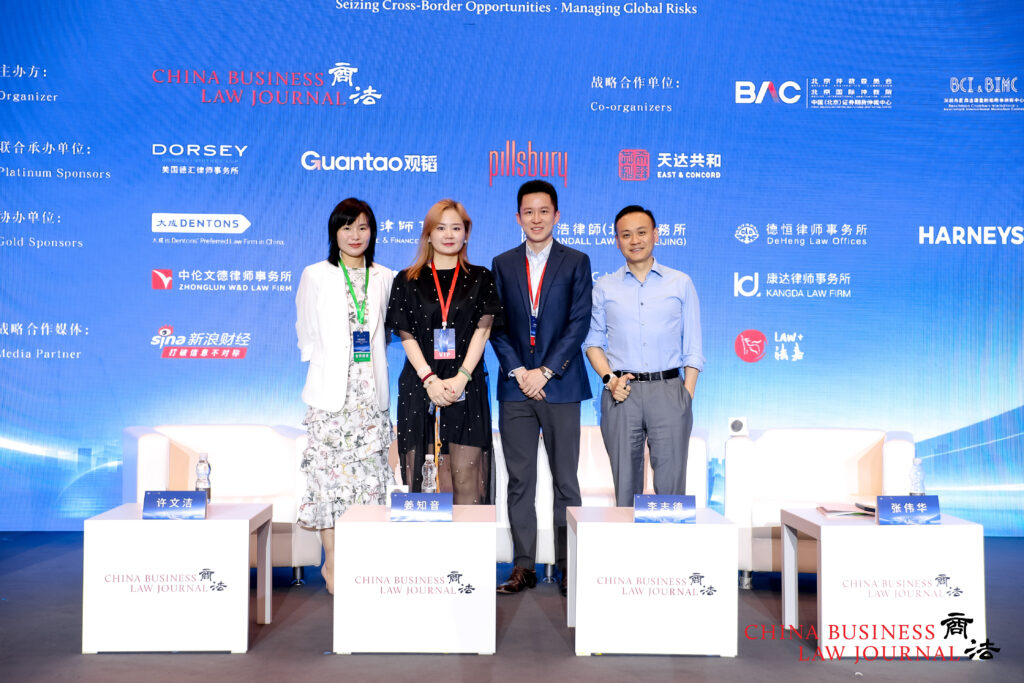
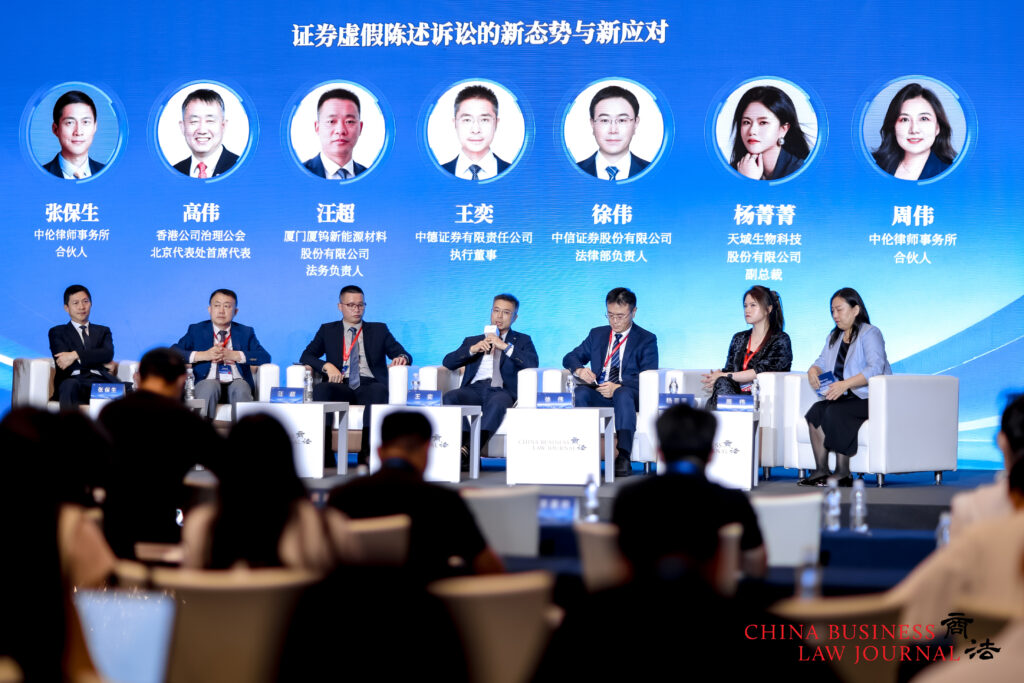
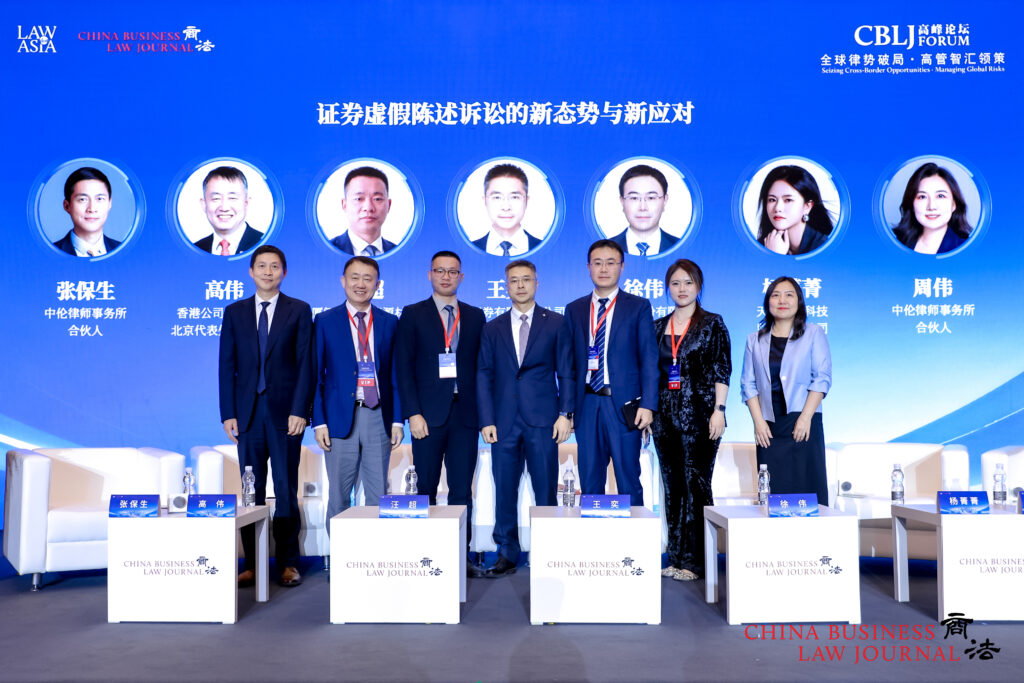
Trends and tactics in securities misrepresentation litigation

Zhong Lun Law Firm panellists:
Zhang Baosheng, partner
Zhou Wei, partner
Institution/Enterprise panellists:
Gao Wei, chief representative, Beijing Representative Office, The Hong Kong Chartered Governance Institute
Wang Chao, legal director, XTC New Energy Materials
Wayne Wang, executive director, Zhong De Securities
Xu Wei, head of legal department, CITIC Securities
Nina Yang, vice president, TianYu Bio-Technology

Zhang Baosheng
WHILE SECURITIES misrepresentation litigation is growing in both volume and sophistication, Zhang Baosheng said core disputes in bond-related cases remained to be clarified. He observed a marked rise in claims brought by institutional investors – and said they should bear a burden of proof commensurate with their professional expertise.
With the administrative-civil-criminal accountability triad now firmly established, he said companies should shift risk controls further upstream and guard against litigation costs arising from the excessive joinder of defendants.
“The best approach, of course, is to move the risk-prevention checkpoints forward, ensure robust compliance management, and have intermediaries diligently perform their duties, so that risks are nipped in the bud,” said Zhang.

Xu Wei
Xu Wei said the resolution of securities misrepresentation disputes was trending towards greater plurality featuring “model litigation combined with batch mediation”, with the attribution of liability to intermediaries more finely calibrated.
He said companies should focus on source-level risk control and robust working-paper documentation, exercise caution in selecting dispute resolution mechanisms, and maintain open communication with regulators to tackle practical difficulties caused by blurred liability boundaries.
Engaging external specialist lawyers when needed can offset the internal constraints of limited case exposure and experience, enhancing both defence capabilities and risk control.
“Securities misrepresentation is extraordinarily complex and specialised, which naturally challenges in‑house legal teams,” he said. “Their own sample pools are simply too small; even leading securities firms cannot have experienced every type of misrepresentation dispute. This inevitably leaves legal teams at securities companies and listed firms with a naturally limited vantage point.”

Nina Yang
Nina Yang offered insights from a corporate risk control standpoint. “Greater precision in assigning liability is both a shield and a loftier requirement,” she said. In her view, internal controls must be anchored in substance; backing directors, supervisors and officers (DSOs) in fulfilling their responsibilities.
On disclosure compliance for listed companies, she said they need to embed standardised workflows and reinforce end-to-end verification – challenging data provenance, justifications for discrepancies and the soundness of conclusions – to ensure the integrity of disclosures.
She also highlighted ongoing, routine co-ordination with intermediaries, suggesting that companies sustain engagement with them without compromising independence and incorporate them as part of the compliance defence. Effective risk control and compliance were the best tools for managing market capitalisation, she said.
Wang Chao
Wang Chao spoke from an operational perspective. The central defence against misrepresentation was to relocate risk management to the front end of the disclosure process, confirming the reliability and completeness of information before announcement drafting, he said.
He called for heightened consistency in disclosures, ensuring internal alignment across different reporting periods and external alignment with upstream and downstream listed companies on key points such as contract terms, risk‑transfer triggers and revenue‑recognition approaches, thereby minimising gaps that invite comparative scrutiny.
“Listed companies must zero in on material information when making disclosures, particularly forward-looking information,” he said. For strategic and predictive statements, he said companies should rigorously unpack the predictive logic and supporting evidence, creating a complete and auditable chain that could be justified and retraced, mitigating the risk of a misrepresentation finding.

Zhou Wei
Zhou Wei said securities misrepresentation litigation had entered a new chapter of “targeted liability attribution”, which fundamentally challenged the response tempo of in‑house legal teams. The conventional approach of awaiting an administrative sanction before retaining external counsel had become obsolete. “Listed companies should identify risks far earlier … Once a civil litigation risk arises, they should activate a co-ordinated administrative‑and‑civil response as early as in routine regulatory inquiries, on‑site inspections or exchange queries,” she said.
In her view, the specialist sophistication of court proceedings now affords defendants wider latitude to argue their case. By forensically analysing transactional causation – for example, demonstrating that an investor’s decision was driven by a market event rather than the alleged misstatement – defendants may secure full exemption from liability.

Wayne Wang
Wayne Wang outlined the emerging role of arbitration in securities misrepresentation cases. He said revised rules now extended beyond conventional commercial arbitration to encompass disputes over securities, futures and derivatives. Where an arbitration clause is included in a prospectus, offering circular or articles of association, arbitration institutions may now accept civil securities disputes such as misrepresentation claims.
Procedurally, arbitration scores highly on speed and collective redress mechanisms. “Arbitration institutions have introduced a three-pillar mechanism of representative arbitration, joint proceedings and model cases, plugging a systemic gap in capital market redress,” he said.
The formalisation of advance compensation arrangements, partial settlement structures, and end-to-end online arbitration platforms further furnish smaller investors with lower-cost and more navigable paths to recourse.

Gao Wei
Gao Wei, referencing numerous Hong Kong listing mandates for Chinese mainland issuers, analysed the new dynamics of misrepresentation disputes through Hong Kong’s regulatory and liability lens. Gao said Hong Kong combined oversight by both the Securities and Futures Commission and the exchange, under which disclosure liability arose either for loss caused by intentional misconduct, recklessness or negligence, or failure by DSOs to take reasonable measures to ensure effective internal controls. This meant DSOs would be held accountable both for specific disclosure acts and for control failures.
Bringing claims in Hong Kong carry cost risks, as the losing party was generally liable for the other side’s legal fees and, if financially vulnerable, might face an order for security for costs, he said. “The [Hong Kong] SFC has substantial powers and a broad toolkit, spanning share buybacks, compensation and even pre-action asset freezing,” added Gao.
Photos
Afternoon session | Workshop 3
Embodied AI: capital movements and risk control

Grandall Law Firm panellists:
Dora Hu, senior partner and director of digital economy research committee
Institution/Enterprise panellists:
Gloria Liu, general counsel, Linkerbot Beijing Technology
Renee Wei, legal director, Xiaomi Corporation
Lily Yu, legal director, Geekplus Technology
Joe Zhou, deputy president, general counsel and senior managing director, China International Capital Corporation
Zhou Wen, general manager of legal department, UBtech Robotics Corporation

Dora Hu
DORA HU set the tone for the panel discussion. “The embodied AI and robotics sector has been the hottest market over the past two years, with funding amounts consistently breaking records and the pace of corporate listings accelerating,” she said.
Discussing international competition, she said China’s embodied AI industry was now on par with, if not surpassing, the US in terms of corporate volume, scale and product applications, while the US had also introduced restrictive policies targeting Chinese mainland products, such as banning US government procurement of them.

Gloria Liu
Gloria Liu believed that embodied AI “must go global”, though data compliance and anti-sanctions compliance were essential prerequisites. Using Linkerbot as an example, she said data mostly consisted of anonymised physical parameters – such as angles and gripping force – making cross-border transfer relatively safe, though firms must still verify whether the collection scenarios were sensitive.
She admitted that the upstream supply chain remained heavily reliant on the US, which led to a sharp increase in attention towards anti-sanctions during the past few years. Regarding US outbound investment review (OIR) scrutiny in overseas financing, she said companies should focus on whether obligations fell under the notification or prohibition category.

Renee Wei
Renee Wei proposed that the core of investment legal practice was to “prioritise risks into tiers” rather than enumerating them all. In the field of embodied AI, she focuses on ownership defects in core technology, especially the issue of service inventions.
“If a founding team leaves their previous employer and swiftly applies for patents on technology in a similar direction, or uses it as the startup’s core technological asset, there is a risk that the proprietary rights may not belong to the startup,” she said. The patent application could even serve as suspected evidence of trade secret infringement.
She added that while Chinese mainland enterprises possess advantages in supply chains and application scenarios, going global “is not just about exporting the product itself, but also exporting the product’s liability and compliance framework”. This required startups to build a comprehensive compliance system tailored to their target markets, she said.

Lily Yu
Lily Yu posed the question: “Do you think a failed R&D path constitutes a trade secret?” She said they were also core assets – particularly in the rapidly iterating embodied AI sector – as they could save companies from costly trial-and-error attempts.
Regarding IP strategy, she said more patent applications were not necessarily better; the key was to align with corporate strategy and make a prudent choice between patent protection and trade secrets.
With new regulations introduced in June, the cap on administrative penalties for trade secret infringement had risen to RMB50 million (USD7.4 million), while the difficulty in gathering evidence for rights enforcement had decreased.
Touching on globalisation, she said firms should not blindly rush into Europe without conducting thorough market research. Relatively speaking, they might consider following major clients into emerging markets such as South America, leveraging ancillary demand to gradually revitalise regional operations.

Zhou Wen
Zhou Wen admitted that the humanoid AI industry in general remained in its infancy. He highlighted three key compliance practices. First, do a comprehensive upgrade of trade secret controls centred on personnel, adding that “from policies and training to onboarding and offboarding, including identifying who requires non-compete arrangements, we have completely overhauled the entire framework over the past two years”.
Second, for upcoming consumer-facing home-companionship products, the firm is preparing to establish an AI ethics committee to define boundaries for highly simulated emotional companionship. Third, anti-fraud measures are embedded throughout the business flow. This means “the audit process is not an afterthought but is integrated from project initiation – including contract signing and execution – right through to final delivery”.
Photos


Trade secrets and IP protection in the AI era

Zhonglun W&D Law Firm panellists:
Hu Gaochong, deputy director, senior partner
Wang Siyuan, partner
Institution/Enterprise panelists:
Raynox Li, head of legal, a technology company
Kobe Liu, general counsel, HollySys
Ma Yihan, general counsel & vice president, Perfect World
Lina Sun, general counsel, Modian Entertainment Technology
Shawn Xiao, general counsel, a leading technology company expanding overseas

Raynox Li
RAYNOX LI said the mass production of marketing content in the artificial intelligence-generated content (AIGC) era was sharply compressing the time available for legal review, rendering the traditional model of “manual comparison + post-hoc checks” unsustainable.
His proposed solution was for companies to develop “smart legal enforcement tools”: first consolidating their own marketing content into a structured asset library, then tasking AI agents with 24/7 dynamic surveillance of rival channels and automated similarity screening.
This would release in-house teams away from mass mechanical screening and towards higher-value judgement calls and strategic decision making, he said,.
“In the AI era, legal functions should pre‑embed compliance rules into the AI production chain,” said Li. By codifying advertising clearance standards into an internal knowledge base and using AI agents to handle day-to-day, low‑risk queries, companies can both raise business efficiency and build a more proactive, granular compliance defence.

Kobe Liu
Kobe Liu said AI was unsettling the underlying logic of IP protection. The commercial lifespan of vertical applications was now far shorter than the duration of patent protection, making it difficult to justify high-cost IP strategies. By shortening R&D cycles in sectors like pharmaceuticals, AI enabled competitors to overcome patent blockades via multiple parallel approaches, while open-source innovation was inherently at odds with patent exclusivity, Liu said.
The cross-domain integration capabilities of large models were also devaluing the uniqueness of industry-specific data, prompting companies to reconsider their trade-secret strategies for the age of AI, Liu said.
“We may now see teams divided into two camps in the AI era: those who grasp AI and those who do not,” he said. In his view, IP heads need not only patent and technical know-how, but also AI literacy and a capacity for “strategic reduction” – discerning the critical few assets that drive long-term competitiveness amid an overwhelming flow of information.

Ma Yihan
Ma Yihan said deep integration of AI into content production had rendered the conventional IP model of managing separate “trademark, copyright, patent” workstreams no longer fit for purpose. The separation of IP from data strategy, platform policies and the creative workflow weakens both innovation profitability and legal resilience.
She said companies should embed IP‑rights strategy upfront across the production process, embracing an “evidence‑engineering” approach to methodically plan for documentation and compliance at every stage – from concept and data origin to human‑machine interaction.
“When AI is involved in content creation and innovation in this era, making early preparations will undoubtedly deliver greater strategic leverage for your business,” she said.

Lina Sun
Lina Sun leverages AI for cross‑border trademark strategy. Sun said AI tools could conduct similarity searches across multiple countries and perform initial screenings of brand connotations, greatly cutting the time and resource burden on in‑house counsel. Further automation – using trademark AI agents for ongoing monitoring, evidence collection and automated drafting of opposition filings – was also feasible.
”The essence of modern trademark planning and brand protection in the AI age lies in data‑driven processes and automation,” she said.
She also reminded in-house counsel to retain a critical role in exercising professional judgement on infringement issues and enforcement tactics. “Avoid a ‘take‑it‑as‑is’ approach; what the AI produces must be assessed, fine‑tuned and modified… Stay curious, stay proactive, and join in embracing AI,” Sun said.

Shawn Xiao
Shawn Xiao examined the tactics used by Chinese overseas companies in patent disputes in Europe and America, considering both offensive and defensive stances. He said hard‑tech businesses adopted a combined “patent + trade secret” approach, focusing resources on identifiable, enforceable core patents while protecting non‑tangible innovations as trade secrets.
Under the Unified Patent Court (UPC) framework, unitary patents and injunctions could enable rapid, multi‑country pressure across 18 EU jurisdictions. “In European patent contests, once patent quality is reinforced, the right court is chosen, and an integrated strategy is applied … the competitor’s ground turns into our own,” he said.
When responding to claims, Xiao recommended using protective letters to pre-empt ex parte injunctions and, in the US, filing timely design‑arounds to avoid punitive damages and maintain a commercial presence, with the aim of leveraging litigation to achieve settlement.

Wang Siyuan
Wang Siyuan said: “The interplay between technological advancement and rights protection has always been a central theme.” He analysed the judicial reasoning in the Hangzhou Ultraman case, which distinguished between the “input” and “output” stages of AI generation. The ruling held that a claim of fair use was invalid if the defendant failed to prove that the generated content did not incorporate the original work’s distinctive expression.
He advised companies to prioritise using proprietary, public or synthetic datasets and to strictly confine the adjustment of generative models to internal environments. Before publicly releasing any generated content, a combined “human and machine” review should be conducted to avoid substantial similarity.
For cross-border operations, he said adopt compliance requirements nimbly to align with the regulatory expectations of different legal territories, maintaining an evolving equilibrium between AI innovation and rights protection.
Photos

Corporate compliance and data assets: from framework to balance sheet

Kangda Law Firm panellist:
Gou Bocheng, senior partner
Zhang Rui, senior partner
Institution/Enterprise panellists:
Cao Haiyang, senior legal executive, arbitrator, legal AI expert and investor
Ge Mengying, head of compliance, Patsnap
Wang Siyuan, legal manager, Yuanli Science and Technology
Sophia Xue, legal and compliance director at the headquarters of a nationwide integrated financial group
Cao Haiyang
CAO HAIYANG, drawing on data practices at Syngenta’s modern agricultural technology service platform, said that when companies sought to bring data assets onto the balance sheet, the first step was not valuation or deal structuring but establishing whether the data sources were compliant.
In agricultural settings, public information such as weather and soil data differ from data provided by growers and partners in how authorisation was obtained, their level of sensitivity and restrictions on use and “whether the data source is compliant is extremely important” Cao said.
Companies therefore needed to conduct risk analysis by source at the outset, then address the ownership boundaries of processed data, external disclosure obligation and downstream-use restrictions, using contractual arrangements to connect the chain of responsibility, Cao added.

Ge Mengying
Ge Mengying said a data compliance framework should not be treated as a one-off exercise but continuously recalibrated across the full data lifecycle. It could “never really be finished” and must be adjusted in real time, particularly as overseas expansion, AI applications and multi-jurisdictional regulation increasingly intersect, Ge said.
Companies should start by mapping data sources, access controls, data-sharing arrangements and cross-border transfers, then apply layered governance based on whether they operate on a B2B or B2C basis, the sector they were in and their business priorities, she added.
In practical terms, she said companies expanding overseas should first aim for a “60-point baseline”, meeting common requirements before addressing country-specific rules in key markets to lay the groundwork for subsequent data-resource management and compliant use.

Wang Siyuan
Wang Siyuan said data-resource management neededs to start from concrete business scenarios. For consumer-facing products involving personal information and minors’ data in particular, companies should build the necessity of data collection and use, the adequacy of authorisation and functional boundaries of the product into the design stage.
On overseas expansion, she said: “When we talk about a product going overseas, it may not naturally mean your data is going overseas.” Companies should therefore not simply equate overseas product rollout with cross-border data transfers, Wang added. They should first assess whether the relevant data genuinely needed to move across borders, and then design segmentation solutions across architecture, storage and staffing to minimise the compliance pressure created by data flows, she said.

Sophia Xue
Sophia Xue said that against a backdrop of intense regulation, the key for financial information service providers seeking to bring data resources onto the balance sheet and pursue subsequent financing lay not in conceptual packaging, but in whether the underlying assets could withstand look-through scrutiny.
Referring to the recent tightening in reviews of data-asset Asset-Backed Securities (ABS), she said regulators “pressing pause only means a pause, not that issuance is no longer possible”. The core objective would be to distinguish genuine data assets from “pseudo assets”.
If companies wanted to turn data resources into financeable assets, they must not only strengthen data compliance and valuation foundations at source, but also show that the assets could generate independent, real and certain cash flows – and genuinely meet exchange requirements on asset quality and cash recovery capacity, Xue said.

Gou Bocheng
Gou Bocheng said the prerequisites for balance-sheet recognition and data financing were that the data had value, could be measured and generate economic benefits for the company, and that data compliance remained the necessary path. The core of a data compliance framework centred on clear data sources, clear ownership and traceability, with continued improvement needed around data ownership, the full lifecycle of data processing and cross-border data transfers, Guo said.

Zhang Rui
Zhang Rui said that when building a compliance framework for a company, it was not enough to roll it out mechanically against a standard checklist; priority areas should be identified taking into account the core business. “It is possible to place data governance among the priority areas in compliance system-building,” she said.
Data-governance companies and data suppliers, in particular, should embed data-governance requirements in organisational structures, division of responsibilities, annual targets, internal-control audits and certification assessments. Only by bringing these elements into the same closed-loop compliance framework can data-resource management achieve clear accountability and documented processes – providing a stronger basis for subsequent balance-sheet preparation.