










Fuel’s essential importance to driving society and the economy cannot be overstated. It is the lifeblood of transportation, which in turn sustains commerce, industry and everyday mobility.
Businesses that operate vehicles, transport food and goods, or provide delivery services are dependent on fuel so rising costs associated with using it inevitably reverberate across all sectors of the economy.
One of the most vulnerable sectors to fuel price fluctuation is the aviation industry. In the Philippines, the National Internal Revenue Code of 1997 (NIRC), under section 135, recognises the unique position of the aviation industry by exempting petroleum products sold to international carriers from excise tax when used for international operations.
The NIRC has likewise established refund mechanisms that allow fuel suppliers and importers to recover taxes and duties paid on petroleum products. Globally, jet fuel purchases are highly standardised and regulated. As jet fuel constitutes a substantial portion of an airline’s operating expenses, increases in global oil prices significantly affect airline profitability and overall access to air travel.
According to the International Air Transport Association (IATA), the global airline industry has historically adapted mechanisms to address high fuel prices, such as fare adjustments, capacity optimisation and procurement management. However, problems arise when fuel prices rise rapidly and airlines do not have time to adapt their strategy.
Philippines acts amid oil surge

Managing partner
Gargantiel and Associates
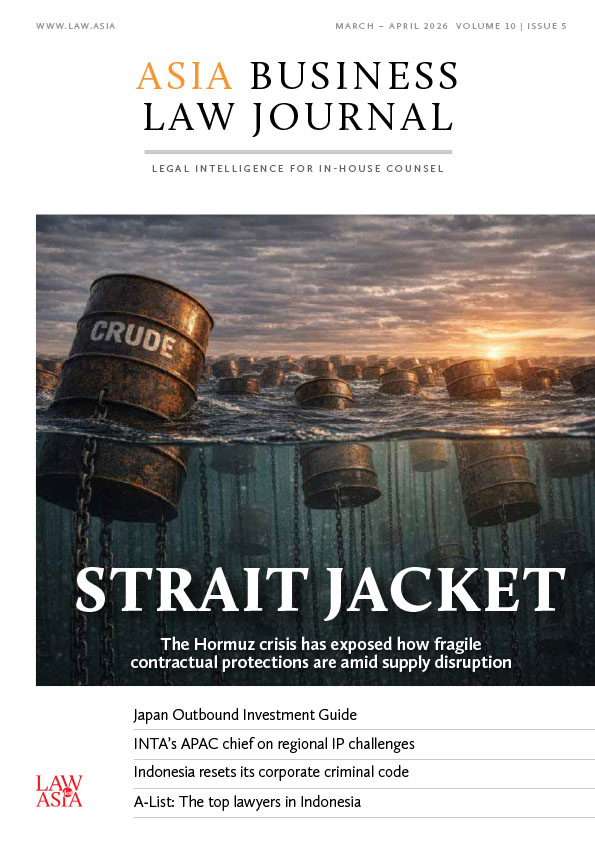
In March, global oil prices experienced a significant surge due to political hostilities in the Middle East and the resulting closure of the Strait of Hormuz. This almost immediately drove up airline ticket prices, and the director general of the IATA said it would take months for jet fuel supplies and prices to normalise, even if the strait reopened.
In response, the Philippine government enacted Republic Act No. 12316, which amended section 148 of the NIRC and authorised the president, on the recommendation of the Development Budget Co-ordination Committee (DBCC), to temporarily suspend or reduce excise taxes on petroleum products once the average Dubai crude oil price reached a specified threshold.
Accordingly, Executive Order No. 114 was issued following the Department of Energy’s certification that the average Dubai crude oil price had reached USD93.71 per barrel over the preceding 30-day period.
Acting on the recommendation of the DBCC, temporary suspension of excise taxes on liquified petroleum gas and kerosene was ordered for a period of three months. Significantly, however, the suspension expressly excluded kerosene when used as aviation fuel. Notwithstanding such exclusion, the government established regulatory mechanisms to mitigate the impact of rising fuel prices.
CAB adjusts airline fuel surcharges

Junior associate
Gargantiel and Associates
The Civil Aeronautics Board (CAB) had previously issued CAB Policy Resolution No. 25 (2022), authorising airlines to impose fuel surcharges in response to continued escalations of jet fuel prices in the global market, on the approval of their applications.
It likewise established a fuel surcharging matrix that prescribes the corresponding levels that may be imposed, depending on prevailing prices, by airlines to recover fuel costs and stem losses caused by an upward spike in fuel cost. It has since adjusted the fuel surcharge levels multiple times in response to rising oil prices and foreign exchange fluctuations.
Additionally, in April the CAB implemented a 15-day price monitoring and implementation cycle for fuel surcharge imposition to mitigate the impact of price surges on air travel costs. The highest fuel surcharge level set by the CAB was 19 (just below the maximum level 20) from 16-30 April.
CAAP cuts fees as fuel eases
Meanwhile, effective since 1 April, the Civil Aviation Authority of the Philippines – pursuant to its authority under Republic Act No. 9497 and in accordance with directives issued by the Department of Transportation – reduced aeronautical fees and passenger service charges across airports nationwide. This was for the purpose of providing immediate relief to airlines and passengers due to continued rises in global fuel prices.
From early June, fuel prices showed welcome signs of easing and appeared to be gradually realigning with the rates prior to the global oil crisis. From 1-15 June, the CAB lowered the fuel surcharge to level 13.
Aviation authorities maintain active monitoring and are expected to implement corresponding adjustments when necessary as prices fluctuate in accordance with existing regulatory frameworks and mechanisms governing aviation charges.
Vanel Andrea Beltejar is a managing partner and Danielle Ibojos is a junior associate at Gargantiel Law in Quezon City
 Gargantiel and Associates
2nd Floor Times Square Building
No. 57 Examiner St.
corner Times St.
West Triangle, Quezon City
Philippines 1104
www.gargantiel.com
Contact details:
T: +63 8355 9623
E: admin@gargantiel.com