



Web Analytics

  • Law Asia
  • ABLJ
  • CBLJ
  • IBLJ
Register Login Subscribe
Resources
Awards galleryA-List lawyersLaw firm directory
Sections
News & dealsBusiness law digestDispute digestLegal Q&AFeaturesOpinionCorrespondentsExpert briefing
Topics
Data privacyArtificial intelligenceDispute resolution
Law.asia home
Archive
.TV
Awards
CBLJ Forum•Beijing 2026
Events
Jobs
About us
Contact us
Follow Law.asia

India Business Law Journal

    • LinkedIn
      Facebook
      Twitter
      Whatsapp
      Telegram
      Copy link

      SECTIONS

      • News
      • Business law digest
      • Dispute digest
      • Legal Q&A
      • Features
      • Opinion
      • Correspondents
      • Expert briefing

      ABOUT US

      • Editorial board
      • Publisher & credits

      TOPICS

      • Data privacy
      • Artificial intelligence
      • Dispute resolution

      RESOURCES

      • Awards gallery
      • A-List lawyers
      • Law firm directory

      E-READER EDITION

      ARCHIVE
      LinkedIn
      Facebook
      Twitter
      Whatsapp
      Telegram
      Copy link
India Business Law Journal India Business Law Journal
  • Sections
    • News & deals
    • Business law digest
    • Dispute digest
    • Legal Q&A
    • Features
    • Opinion
    • Correspondents
    • Expert briefing
  • Videos
  • Awards
  • A-List
  • Jobs
  • Subscribe
  • Events
  • Law Asia
  • ABLJ
  • CBLJ
  • IBLJ
  • icon
    • Login
    • Register
  • Law Asia
  • ABLJ
  • CBLJ
  • IBLJ

India Business Law Journal
  • Sections
    • News & deals
    • Business law digest
    • Dispute digest
    • Legal Q&A
    • Features
    • Opinion
    • Correspondents
    • Expert briefing
  • Videos
  • Awards
  • A-List
  • Jobs
  • Subscribe
  • Events
  • icon
    • Login
    • Register
Home SNG & Partners Either or survivor bank accounts: Rights of heirs explained
  • IBLJ Correspondents
  • SNG & Partners

Either or survivor bank accounts: Rights of heirs explained

By Sanjay Gupta, SNG & Partners
22 January 2026
0
220
LinkedIn
Facebook
Twitter
Whatsapp
Telegram
Copy link

Either or survivor accounts are generally considered to be joint savings or fixed deposit accounts that are operated by two individuals. Such account holders mandate the bank that either of them may operate the account independently during their lifetimes. They also provide that on the death of one of the account holders, the surviving account holder may operate the account. The bank is discharged of its obligations by allowing the complete withdrawal of funds by the surviving account holder.

However, the question then arises as to whether the legal heirs of the deceased account holder have no rights whatsoever to the amount in the account. If this is so, the further question is whether the entire right to the amount after the death of one of the account holders belongs to the surviving account holder. The answer is that the legal heirs of the deceased account holder do have the same rights and interests in, and title to, the amount as did the deceased account holder. The surviving account holder is liable to account for the money in the account to the legal heirs of the deceased account holder.

Bank liability and heirs’ rights
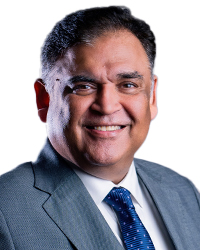
Sanjay Gupta
Sanjay Gupta
Managing Partner (Contentious Practice Group)
SNG & Partners

The parallel question that must be considered is the liability of the bank towards the legal heirs. In an account operated as one that is either or survivor, the bank bears no responsibility towards the legal heirs of the deceased account holder unless such heirs obtain a court order restraining the bank from releasing the amount to the surviving account holder. The surviving account holder then holds the money as trustee for the legal heirs of the deceased account holder.

When the bank holds monies in fixed deposits, the signatures of both depositors need not be obtained for payment of the amount of the deposit on maturity. However, both depositors must sign and take responsibility in the event that the deposit is paid before maturity. In the situation where one depositor dies before the maturity of the fixed deposit, no payment of the fixed deposit before the term’s expiry may take place without the concurrence of the legal heirs of the deceased account holder.

Joint account liens, rights clarified

One account holder cannot create a lien or third-party interest over the account. The consent of both parties is necessary.

The Reserve Bank of India circulars on these rights and liabilities are clear and direct. In particular, the 2015 Master Circular on Customer Service in Banks sets out the position in law and the procedures that may be followed.

In the case of Prabha Kaul (Deceased) through Legal Representative v Chandra Kaul Muthoo and Ors, Delhi High Court held that the holder of the joint account may be authorised to withdraw the amount and that they may be permitted to transfer that amount to the heirs or legal representatives of the deceased joint holder. The court further held that although the bank may be discharged by payment to the survivor, the survivor will be accountable to the heir, the joint account holder. In Anumati v Punjab National Bank, the Supreme Court held that a bank cannot use the amount in a fixed deposit account to pay a pledge of that deposit as collateral by one account holder without the authority, knowledge or concurrence of the other account holder.

In the recent case of Shabeena Ibrahim and Anor v Mir Usman Dissooki, the Jammu and Kashmir High Court followed Prabha Kaul in holding that payment made by the bank to the surviving holder of an either or survivor account containing fixed deposits constitutes a valid discharge of the liabilities of the bank. Any continuing dispute is between the deceased’s legal heirs and the survivor. The case arose out of criminal proceedings initiated by heirs against the holder of a power of attorney for the survivor and the bank. The court made it clear that such disputes are civil matters and that using the criminal law is an abuse of process.

Bank liability in joint deposit accounts

With regard to an either or survivor account, a bank’s liabilities cease on payment to the survivor on the death of the other account holder. It has no obligation to the deceased’s legal heirs. Where one holder of a fixed deposit account dies, the bank will be discharged by payment to the survivor upon the maturity of the fixed deposit. The deposit cannot be withdrawn by the survivor before maturity without the heirs’ consent. The fixed deposit cannot be pledged by only one of the account holders.

Sanjay Gupta is the managing partner of the contentious practice group at SNG & Partners.

SNG & Partners logo newSNG & Partners
13A, 13th Floor, Earnest House,
NCPA Marg, Nariman Point
Mumbai – 400 021
www.sngpartners.in
Contact details:
T: +91 22 6983 5151
E: info@sngpartners.in


LinkedIn
Facebook
Twitter
Whatsapp
Telegram
Copy link
  • TAGS
  • Bank Liability
  • Bank’s Discharge Of Liability
  • Banking Finance and Restructuring
  • Banking Law India
  • Either/Survivor Accounts
  • Fixed Deposit Restrictions
  • Fixed Deposit Rules
  • India
  • Joint Account Holder Rights
  • Joint Account Trust Relationship
  • Joint Bank Accounts
  • Legal Heirs Rights
  • Reserve Bank Of India Circulars
  • Sanjay Gupta
  • SNG & Partners
  • Succession Disputes
  • Trustee Obligations
Previous articleDelhi High Court decision aims to stop domain name misuse
Next articleInsolvency directors’ duties shift to creditors under IBC section 66
Jan

RELATED ARTICLESMORE FROM AUTHOR

India Digital Banking Regulation
SNG & Partners

Digital banking: Framework of transactions and consumer liability in India

By Sana Khan and Bijal Parikh, SNG & Partners
SNG & Partners

Impact of E-Khata on lending security in Karnataka

By Subrata Mukherjee and Vignesh Kamath, SNG & Partners
RBI Draft ECB Rules
SNG & Partners

RBI moves to liberalise external commercial borrowing

By Nishtha Arora and Kartikeya Rao, SNG & Partners

Most Recent

Bosch Joint Venture

CMS IndusLaw, S&R advise on Bosch-Wheels-Brakes JV

29 May 2026
Arbitration Due Process Limitsvideo

Policy, process and delay in arbitral challenges

By Sneha Jaisingh and Jaidhara Shah, Bharucha & Partners
3 June 2026
Impact Investing Compliancevideo

Impact investing: Do use of proceeds clauses actually work?

By Mita Sood, Bharucha & Partners
3 June 2026
India AI Digital Regulation Framework

Nurturing digital adoption with light-touch regulation

By Probir Roy Chowdhury and Sajai Singh, JSA
3 June 2026

Market Pulse

ELP Equity Promotions

Economic Laws Practice promotes four to equity partnership

2 June 2026
Hiral Motta Rejoins CAM

Hiral Motta returns to Cyril Amarchand as real estate partner

1 June 2026
Bombay Law Chambers Promotions

Bombay Law Chambers promotes five counsel as partners

28 May 2026

Correspondents

India AI Digital Regulation Framework

Nurturing digital adoption with light-touch regulation

By Probir Roy Chowdhury and Sajai Singh, JSA
3 June 2026
Impact Investing Compliancevideo

Impact investing: Do use of proceeds clauses actually work?

By Mita Sood, Bharucha & Partners
3 June 2026
Arbitration Due Process Limitsvideo

Policy, process and delay in arbitral challenges

By Sneha Jaisingh and Jaidhara Shah, Bharucha & Partners
3 June 2026

Features

India FDI Policy Update

Policy, paradox and participation

LG India’s Rajiv Malik welcomes changes to Press Note 3 that mean a new FDI policy for close neighbours

21 May 2026
Knock knock

Knock knock

Preparing for India’s multi-agency dawn raids: Building response architecture, preserving privilege and documenting every step

6 May 2026
Insurance Cybersecurity Data Protection

Guarding the nest eggs

Life insurers’ digital shift demands stronger legal oversight to protect customer data and cyber resilience

6 May 2026
LG India’s Rajiv Malik welcomes changes to Press Note 3 that mean a new FDI policy for close neighbours
Preparing for India’s multi-agency dawn raids: Building response architecture, preserving privilege and documenting every step
Life insurers’ digital shift demands stronger legal oversight to protect customer data and cyber resilience

Expert Briefings

Arbitrating in India

11 May 2026
India Singapore Arbitration Strategy

Selecting seat, venue and institution in arbitration

By Ankit Goyal, RPC
5 May 2026

Shaping Indian arbitration jurisprudence

By Sumeet Kachwaha, Kachwaha & Partners
5 May 2026

Opinion

Prohibited Claims Arbitration

Clipping the clause

To what extent does party autonomy hold sway over contracts that involve exceptional or prohibited clauses?

20 February 2026
To what extent does party autonomy hold sway over contracts that involve exceptional or prohibited clauses?

Jobs

Sangare and Associates

Lawyer

24 November 2025

Director of ADR Services – Greater China Focus

2 July 2025
LAW.ASIA

Asia’s leader in legal intelligence

Law.asia is an award-winning portal providing news, analysis and expert advice on business law in Asia to in-house counsel, lawyers in private practice and other business and legal leaders. It features the proprietary editorial content and archives of our premium legal magazines – Asia Business Law Journal, China Business Law Journal and India Business Law Journal – along with videos, law firm listings, awards and much more. Produced by Law.asia Limited, an independent media company, Law.asia is multilingual, offering content in English, Chinese, Japanese and Korean. Find out more.
Follow Law.asia
Law firms Awards Events Legal jobs • Post a job
About us Archive Archive Archive Archive Subscribe Contact us
Please send any press releases, deal announcements, details of new hires, newsletters and any other news items to: news@law.asia
  • Policy on advertising & sponsorship
  • Disclaimer
  • Terms & conditions of use
  • Privacy Policy
© Copyright 2026 Law.asia Limited. All rights reserved.

Follow us on LinkedIn

Follow now