












Investors show home bias when they fund local assets to a disproportionately greater extent than they do in assets in global markets. In such cases, they may be advised to diversify their portfolios. Diversification is usually considered when choosing investment assets, but also applies to the geographic choice of market. International markets do not usually move as one in direction and time. Diversification allows investors to offset lower returns in some by outperformance in others.
Indian investors put their funds in foreign securities for a number of reasons. With the rupee depreciating against the US dollar, rupee-denominated investments may not be sufficient to pay dollar-denominated expenses, such as the education of relatives. Next, pessimistic economic forecasts and uncertain market environments make it imperative for domestic investors to look for good returns and safety in other areas of the world. Mature market assets and high-quality international securities can provide safe havens.
Partner
Shardul Amarchand Mangaldas & Co
Limiting investments to one area of the world may cause investors to miss out on investment opportunities in others. For example, US equity markets, such as the Nasdaq, FAANG and S&P 500, have shown extremely good returns during the last decade. Finally, the Indian markets may find themselves out of step with those flourishing elsewhere. Spreading risk by location reduces the chances of volatility and sees better risk-adjusted returns.
Strong historical evidence shows that international equities benefit from diversification. US equities offer a promising route to global diversification through mutual funds (MF). Not overcoming geographical bias may harm investors’ portfolios in several ways. Investors must be aware of their biases and ensure they are constantly exploring opportunities to diversify and maximise returns.
MFs are investment vehicles that pool money from multiple investors and are professionally managed. They allow investors to access a variety of assets without having to research individual securities. MFs are regulated by the Securities and Exchange Board of India (SEBI) and are permitted to make overseas investments up to USD1 billion for each MF, within an overall industry limit of USD7 billion. USD50 million is reserved for each MF within the overall industry limit. The limit was raised to its present USD7 billion by the Reserve Bank of India (RBI) in April 2008.
MFs may also invest in overseas exchange-traded funds (ETF) up to USD300 million for each MF within the overall industry limit of USD1 billion. New MF schemes investing in such funds must set out the amounts they are going to allocate within the regulated limits.
MFs have reached the USD7 billion limit and since February 2022 the SEBI has halted fresh investments abroad. MFs investing in overseas ETFs have been barred from accepting fresh inflows from April 2024.
The RBI has not raised the MF overseas investment limits because of its apparent concern about the continual depreciation of the rupee against the dollar. This has been the result of geopolitical factors such as the Russia-Ukraine war, global interest rate hikes and the impact of global market movements on local portfolios, particularly of retail investors. An important factor in reaching the limits was the heightened investor interest in US equities on the back of the rally in technology stocks. Despite many requests, the RBI has not increased the overseas investment limit, although India’s foreign exchange reserves have gone up.
Investors may turn instead to local ETFs tracking global indices up to available capacity, although the deviation between i-NAV and the market price has increased. The liberalised remittance scheme may, however, be a better option. This allows individuals to remit up to USD250,000 annually without the RBI’s prior approval for permitted transactions. There is, however, a tax on remittances collected at source subject to certain thresholds. Foreign exchange rate fluctuations, higher charges, tax regulations and disclosures also make this route more difficult than investing in MFs.
A noted investor said, “Diversification is a safety factor that is essential because we should be humble enough to admit we can be wrong.” MF investors believe they will benefit from an increase in overseas investment limits. The question is when will the RBI enhance the limit.
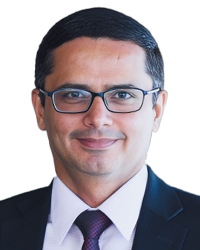
Yogesh Chande is a partner at Shardul Amarchand Mangaldas & Co.
 Shardul Amarchand Mangaldas & Co
Amarchand Towers, 216,
Okhla Phase III, Okhla
Industrial Estate
Phase III,
New Delhi, Delhi 110020
Executive Chairman:
Shardul Shroff
Managing Partner:
Pallavi Shroff and Akshay Chudasama
Contact details:
T: +91 11 4159 0700
E: Connect@AMSShardul.com